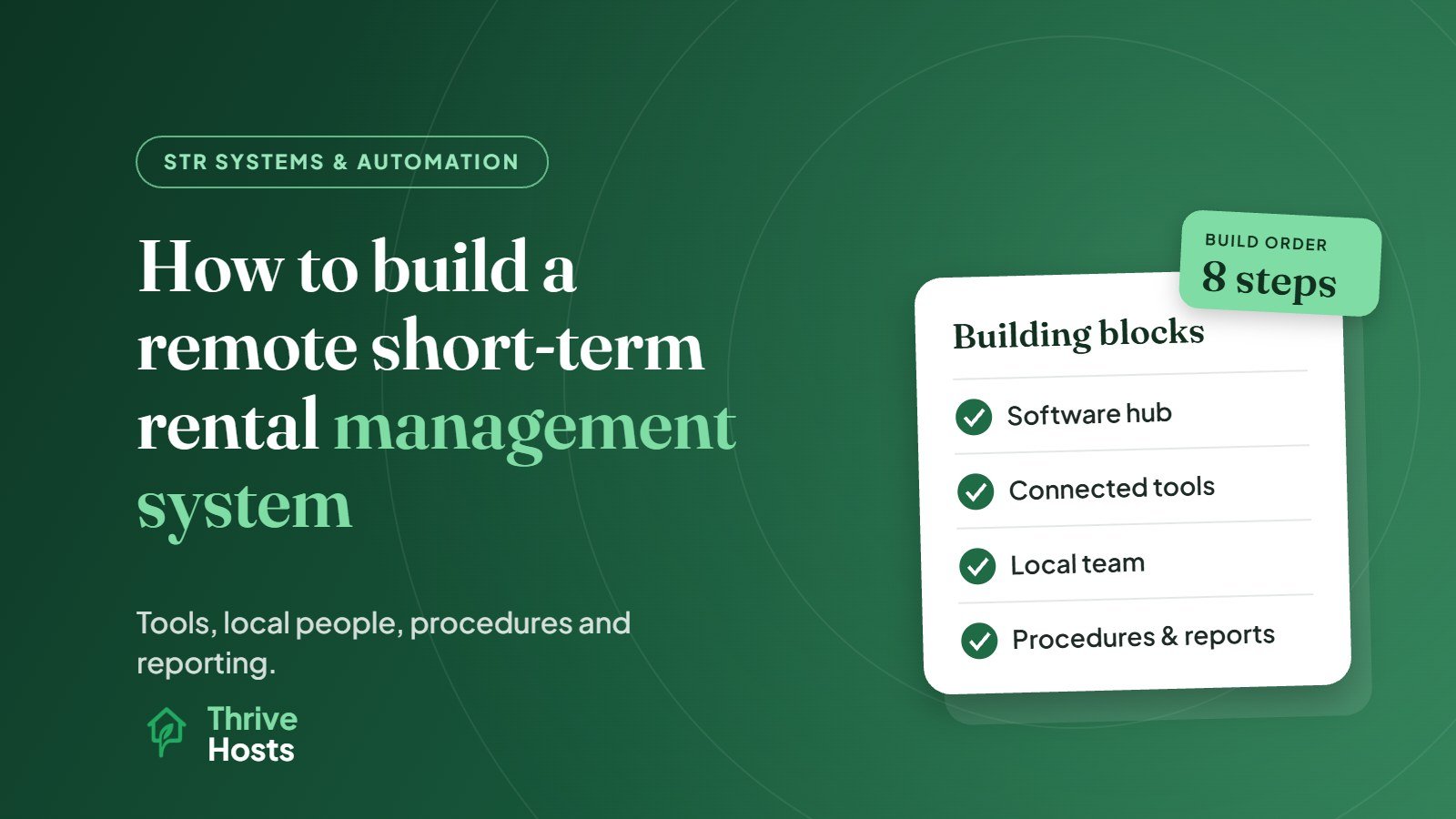
A remote short-term rental management system is the combination of tools, local people, written procedures and reporting that lets a property run well without the owner being there, or constantly on their phone. Building one means deciding what each part of the operation runs on: which software holds the bookings, who does the physical work, how information flows between them, what happens when something goes wrong, and how you know it is all working.
Our guide to managing a short-term rental remotely covers the day-to-day practices. This article is about the structure underneath them: how to design and build the system so those practices happen reliably.
The Five Building Blocks
1. A central software hub
Everything starts with one place where every reservation lives. For most remote owners that is a property management system with built-in channel management, connected to Airbnb, Vrbo, Booking.com and any direct bookings. The hub keeps calendars aligned, sends guest messages, creates tasks and records revenue. See what a property management system for Airbnb is for the detail.
2. Connected tools around the hub
Around the hub sit the tools that act on bookings: a dynamic pricing tool, smart locks that issue a code per stay, a cleaning or task app, and optional monitoring devices such as noise or leak sensors. The rule is that each tool gets its booking data from the hub, not from a separate calendar. Our overview of the short-term rental tech stack explains how the layers fit together.
3. A local layer
Software cannot clean, fix a leak or let in a locked-out guest. Every remote system needs local people: a reliable cleaner or cleaning team, a handyperson, licensed trades for plumbing, electrical and gas work, and ideally a local contact who can attend the property if needed. Agree in writing what each person does, how they are contacted, their availability out of hours, and how they are paid.
4. Written procedures
The system should not live in your head. Write short procedures for the work that repeats: the turnover checklist, restocking levels, the check-in process, the response to common guest issues, what to do in an emergency and how approvals work. These documents let anyone helping you, whether a cleaner, co-host or operations partner, follow the same process. Our short-term rental operations checklist is a useful starting point.
5. Reporting and oversight
A remote system needs a way to tell you how it is performing without you checking every message. A weekly or monthly summary should cover bookings, occupancy, average daily rate and revenue, guest reviews, open issues and anything that needs your decision.
How Information Should Flow
Design the system around a booking. When a reservation arrives in the hub, it should automatically block the dates on other channels, schedule guest messages, create a cleaning task for the right date, generate an access code and record the revenue. When the booking changes or cancels, each of those should update.
Then design the reverse flow: how information comes back. Cleaners report completion, damage and supply needs. Guests report problems. Devices send alerts. All of these should arrive somewhere they are seen and acted on, ideally an issue log in the hub rather than scattered text messages.
Build It in the Right Order
- Document the current process for one property, including who does what today.
- Set up the hub and connect your booking channels carefully, testing availability and rates.
- Move guest messaging into scheduled templates and test them on real bookings.
- Connect cleaning so tasks are created from bookings, and agree a checklist with photos.
- Add access control with a smart lock connected to the hub, plus a backup entry method.
- Set up issue tracking and agree vendor contacts and spending limits.
- Add pricing automation with sensible rules and a review rhythm.
- Set up reporting and decide what you need to see each week and month.
Adding everything at once makes problems hard to trace. Each step should work reliably before the next is added.
Accounts, Access and Permissions
A remote system involves several people needing access to different things. Keep ownership of every listing, software account and device account in your own name, and grant others the access they need through proper permissions rather than shared passwords. On Airbnb, for example, co-hosts can be given different permission levels. Keep a record of who has access to what, and remove access when someone stops working with you.
Plan for Failure
A good remote system assumes things will go wrong and has a plan for each. What happens if the smart lock fails at midnight? If the cleaner is ill on a same-day turnover? If the PMS connection drops? If a guest reports a leak? Write down the backup for each scenario and make sure the right people know it. Our guide on what to do when a guest reports a problem covers the in-stay side.
Keep the System Maintained
Systems drift. Templates go out of date, vendors change, pricing rules stop matching the market, and integrations break quietly. Schedule a monthly review of the whole system and a quarterly review of procedures and vendors. The most common STR automation mistakes come from systems that were built well and then left unattended.
Getting the System Built and Run
Thrive Hosts helps owners build and run remote STR operating systems as part of short-term rental operations support: software setup and integrations, written procedures, coordination with your approved local cleaner and vendors, guest communication, issue tracking and owner reporting. We work remotely and do not perform physical work at the property; we make sure the people who do are coordinated.
You keep ownership of your property, accounts and decisions. We help build the system and keep it running.
Book an operations review
We will look at how your property runs today, identify the gaps in your remote setup, and outline what a reliable system would look like.
Book an Operations Review
Bruce J is the CEO of Thrive Hosts and leads the short-term rental team. He works on the operations and performance side of STR: guest communication, pricing and calendar discipline, turnovers, issue tracking and owner reporting across Airbnb, Vrbo and Booking.com. On the blog he writes practical, no-fluff guides for owners and operators who want their rentals to run more consistently.