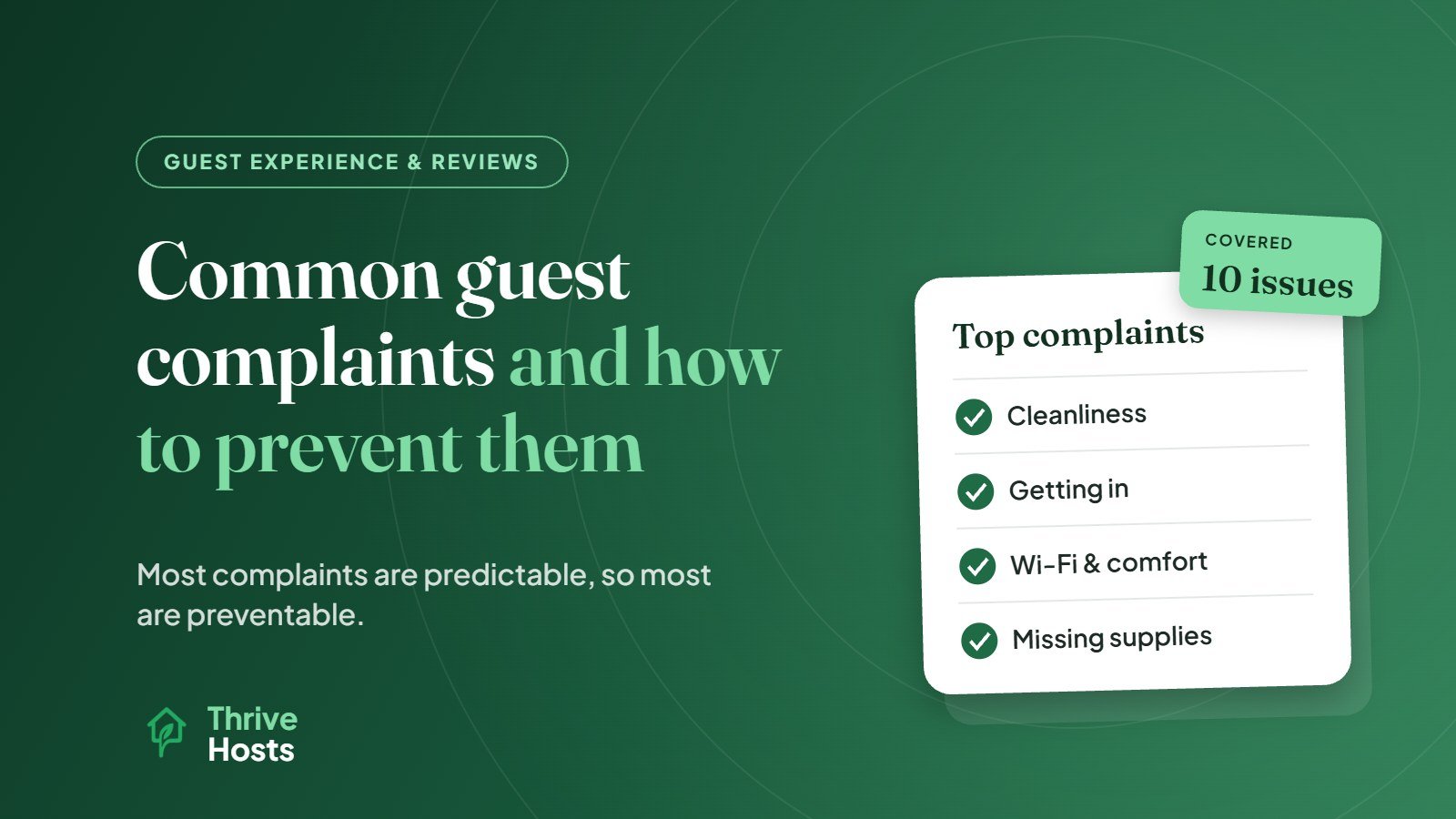
Most guest complaints in short-term rentals fall into a small number of familiar categories: cleanliness, getting in, Wi-Fi, temperature, noise, beds, missing supplies, and a property that does not quite match the listing. The good news is that nearly all of them are predictable, which means they are preventable. The fix is rarely a bigger budget. It is a better process before each arrival and a quicker response during the stay.
Below are the complaints hosts hear most often, why they happen, and what actually prevents them.
1. “It Wasn’t Clean”
Cleanliness complaints usually come from details rather than a dirty property: hair in a drain, crumbs under cushions, a grimy oven handle, dust on high shelves, marks on glasses, or a musty smell in a cupboard. They happen when the clean is mostly good but inconsistent.
Prevention: give your cleaner a room-by-room checklist with reference photos, ask for completion photos before each arrival, and schedule periodic deep cleans for the areas a standard turnover skips. When a guest mentions something, pass it on the same day so it becomes part of the routine.
2. “We Couldn’t Get In”
Access problems are among the most stressful complaints because the guest is standing outside, often tired, sometimes at night. Typical causes are unclear directions, a code that was not updated, a smart lock with flat batteries, or a key box that is hard to find.
Prevention: send step-by-step arrival instructions with photos of the building, entrance and lock. Test access before every check-in. Keep a backup entry option and make sure someone can answer the phone during arrival hours. Our guide to how smart locks help remote Airbnb hosts covers how to set up access that does not depend on handing over keys.
3. “The Wi-Fi Didn’t Work”
Weak or unreliable Wi-Fi is a frequent complaint, especially from remote workers and families streaming in the evening. The router often sits in a cupboard at one end of the property, or the network name and password in the listing are out of date.
Prevention: test speeds in every bedroom and the main living area, add a mesh extender if needed, label the router clearly so guests can restart it, and keep the network details accurate in your listing and messages.
4. “It Was Too Hot” or “Too Cold”
Heating that takes hours to warm up, air conditioning in only one room, thermostats guests cannot work out, or thin bedding in winter all lead to comfort complaints.
Prevention: leave short, clear instructions for heating and cooling, provide extra blankets and fans, and check systems before seasonal changes. If a property has limited air conditioning, say so plainly in the listing.
5. “It Was Noisy”
Street noise, nightlife, thin walls, early bin collections or construction next door can all disrupt sleep. Guests are rarely angry about noise they were warned about. They are angry about noise that surprised them.
Prevention: be honest about noise in the listing and provide earplugs, heavy curtains or a white noise machine where useful. If temporary construction starts nearby, tell upcoming guests before they arrive.
6. “The Beds Were Uncomfortable”
Worn mattresses, flat pillows and sofa beds presented as real beds come up repeatedly in reviews. Guests forgive a lot, but not a poor night’s sleep.
Prevention: invest in decent mattresses and mattress toppers, replace pillows regularly, offer a choice of firm and soft pillows, and describe sofa beds accurately.
7. “There Was No Toilet Paper”
Running out of basics such as toilet paper, soap, dish detergent, bin bags or coffee feels small to the host and careless to the guest.
Prevention: set par levels for every consumable, have the cleaner restock to that level at each turnover, and keep a backup supply on site. Track usage so reorders happen before you run out.
8. “It Didn’t Look Like the Photos”
Old photos, flattering wide angles, missing details about stairs or bathrooms, or amenities that no longer exist lead to accuracy complaints, and these tend to hurt reviews more than almost anything else.
Prevention: update photos after any change, describe limitations honestly, and remove anything that is no longer available. Our guides on ordering Airbnb photos and which amenities guests value cover how to present the property accurately.
9. “The Checkout List Was Too Much”
Long lists of chores at checkout, such as stripping beds, running the dishwasher, taking out every bin and wiping surfaces, can sour an otherwise good stay. Airbnb has also been tightening its rules on house rules and checkout requests; see our summary of Airbnb’s house rules update.
Prevention: keep checkout requests short and reasonable, and make sure any important rules are visible before the guest books.
10. “Nobody Responded”
A slow reply turns a fixable problem into a complaint. The broken kettle is a minor issue; the six hours without an answer is what the guest remembers.
Prevention: decide who answers messages at every hour guests might need help, and set clear response targets. See how fast Airbnb hosts should respond.
Turn Complaints Into a Prevention System
Every complaint is a signal about your process. Keep a simple log of complaints by category, and review it monthly. If the same item appears twice, change something: the cleaning checklist, the arrival message, the listing or the supply list. Over time, the list of things that can surprise a guest gets shorter. When a complaint does turn into a tense situation, our guide on handling difficult Airbnb guests can help.
For hotels and motels, where room readiness, noise and after-hours arrivals cause most problems, see common guest complaints at small hotels and motels.
Getting Help With Guest Experience
Thrive Hosts helps owners prevent and resolve guest complaints as part of remote Airbnb co-hosting: guest communication, cleaner coordination and checklists with your approved local team, issue tracking until fixes are confirmed, and listing accuracy.
You keep your property, listing and accounts. We help make sure the same complaint does not happen twice.
Related reading: WiFi not working.
Get your guest experience reviewed
We will look at recent reviews and guest messages, identify the complaints that keep repeating, and show you what would prevent them.
Book an Operations Review
Bruce J is the CEO of Thrive Hosts and leads the short-term rental team. He works on the operations and performance side of STR: guest communication, pricing and calendar discipline, turnovers, issue tracking and owner reporting across Airbnb, Vrbo and Booking.com. On the blog he writes practical, no-fluff guides for owners and operators who want their rentals to run more consistently.