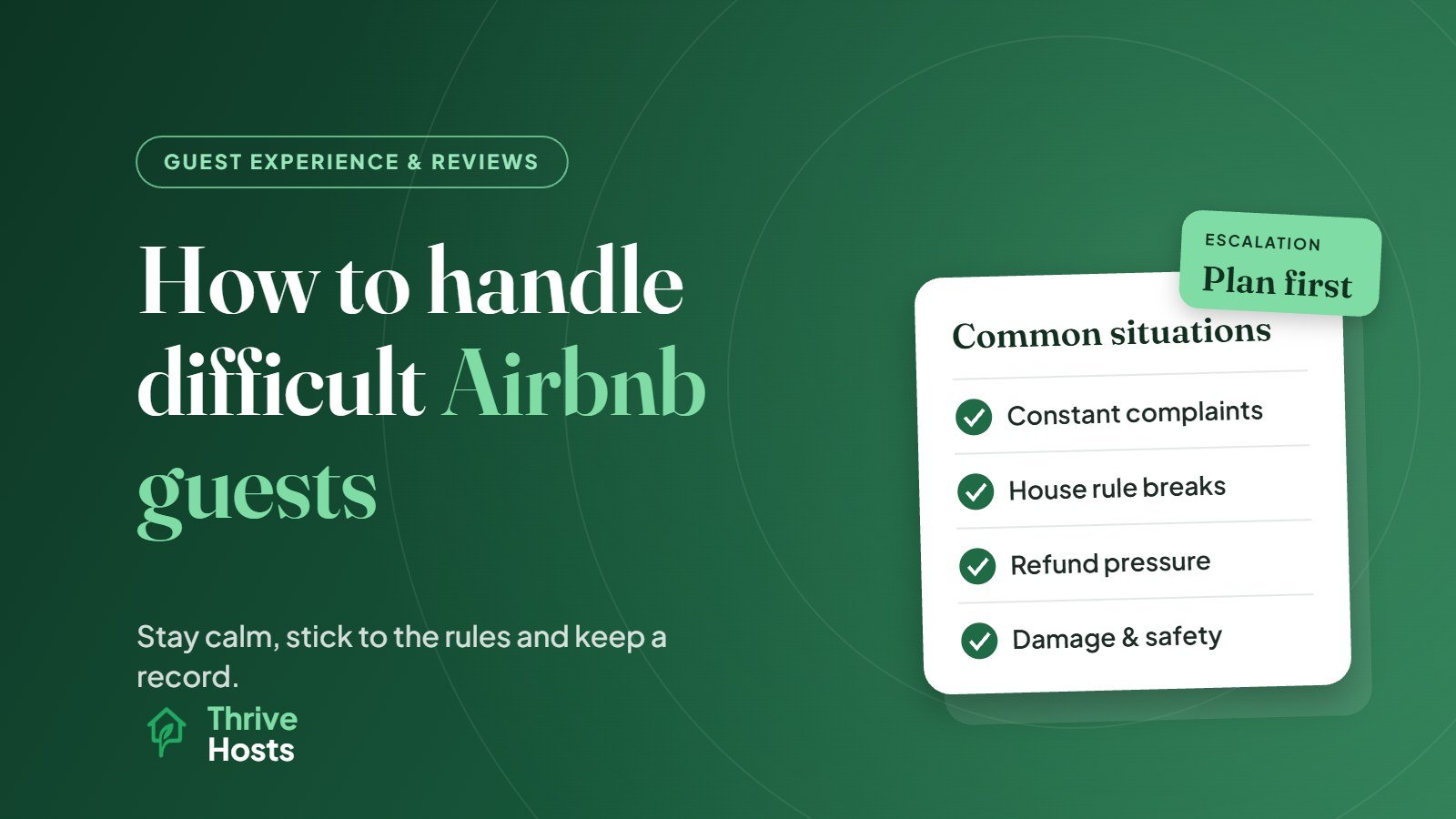
Most difficult Airbnb guests can be handled with three habits: respond quickly and calmly, keep everything tied to your written house rules and listing, and keep all communication inside Airbnb’s messaging so there is a record. When a situation goes beyond a disagreement, such as a party, damage, a threat or a safety concern, escalate to Airbnb, and to local emergency services if anyone is at risk. You do not need to win the argument. You need to protect the property, the next guest and your own position.
It also helps to recognise that “difficult” covers several different situations, and each needs a slightly different response.
The Guest Who Complains About Everything
Some guests message about the water pressure, then the pillows, then the street noise, then the coffee machine. The instinct is to get defensive. A better approach is to separate genuine problems from preferences.
Answer every message promptly and politely. If something is actually wrong, such as no hot water or a broken appliance, acknowledge it, tell the guest what will happen and when, and arrange the fix with your local handyperson or vendor. If it is a preference, such as wanting a firmer mattress, explain what is available and leave it there. Avoid over-apologising for things that match your listing, because it can read as an admission that something was wrong.
Repeated complaints often mean a guest expected something different. Check whether your listing set that expectation, because the next guest may expect the same thing.
The Guest Who Breaks House Rules
Extra overnight guests, smoking, undisclosed pets, noise late at night and gatherings are the common rule breaks. Airbnb’s ground rules for guests back hosts up here: guests are expected to follow the host’s house rules, respect the approved guest count, avoid unauthorised gatherings, observe quiet hours and leave the property in reasonable condition.
When you notice a problem, message the guest directly, refer to the specific rule, and ask them to stop. Keep it factual: “Our house rules allow a maximum of four overnight guests. Our neighbor has reported more people at the property. Please confirm that only the four booked guests will be staying tonight.” Then document what happened through the message thread and any photos from your cleaner.
If the guest does not comply, or the situation is serious, contact Airbnb. Airbnb says it can follow up with guests who break the ground rules, and that repeated or severe violations can lead to suspension or removal from the platform.
The Guest Asking for a Refund or Threatening a Review
Occasionally a guest asks for money back, sometimes with a hint that a negative review will follow if they do not get it. Stay calm and do not negotiate outside Airbnb. Ask what specifically went wrong, offer to fix it if it is fixable, and if a refund or partial refund is genuinely warranted, process it through Airbnb.
If a guest uses a review as leverage, you are not obliged to give in. Airbnb’s reviews policy prohibits threatening a negative review to obtain unwarranted compensation. Keep the conversation in writing, avoid emotional replies, and contact Airbnb support if the pressure continues.
The Guest Who Damages the Property
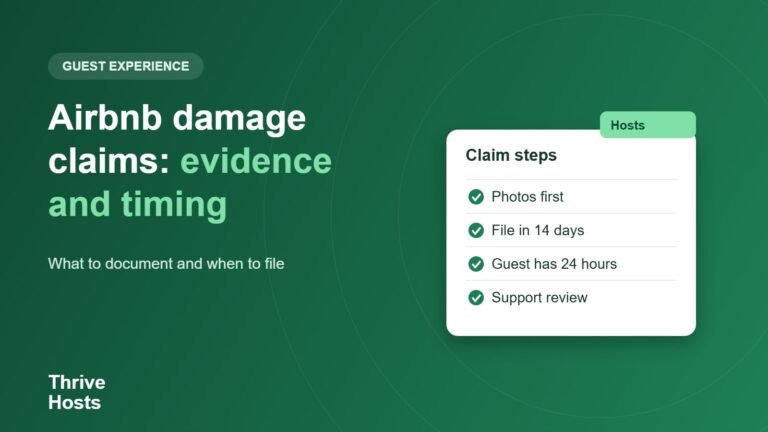
Accidents happen, and many guests report them honestly. When damage is discovered, ask your cleaner for photos immediately, keep receipts or quotes, and message the guest through Airbnb to explain what you found and what it will cost. If you cannot agree, Airbnb asks hosts to file a reimbursement request in the Resolution Center within 14 days of the guest’s checkout. Waiting until the next turnover to deal with it can cost you that window.
The Guest Who Becomes Aggressive or Unsafe
If a guest is threatening, abusive, or doing something that endangers people or the property, safety comes first. Contact local emergency services if there is immediate danger, then contact Airbnb. Do not go to the property alone to confront a guest, and do not ask your cleaner or a neighbor to. This is exactly the situation where a pre-agreed escalation plan pays off.
Prevention Does Most of the Work
The best way to deal with difficult guests is to make difficult stays less likely in the first place:
- Clear listing and house rules: state guest limits, parties, pets, smoking and quiet hours plainly, so expectations are set before booking.
- Pre-arrival message: restate the key rules and check-in details in a friendly way a day or two before arrival.
- Accurate photos and description: many complaints start with a gap between what the guest expected and what they found.
- Noise monitoring where appropriate: Airbnb allows noise decibel monitors inside a listing if they are disclosed, though not in bedrooms, bathrooms or sleeping areas, and it does not allow indoor security cameras. Check Airbnb’s device rules before installing anything.
- Fast responses: many complaints escalate because a small issue went unanswered for hours.
Have an Escalation Plan Before You Need One
Decide in advance who handles what. Who answers guest messages late at night? Who contacts the plumber? Who decides whether to offer a partial refund? Who calls Airbnb if a party starts? When these answers are written down, difficult situations become procedures rather than panics.
If you are working out who responds, and how fast, our guide on when to hire a co-host may help, along with the short-term rental operations checklist.
Support With Guest Communication
Thrive Hosts handles guest communication as part of remote Airbnb co-hosting and operations support. That includes answering messages, de-escalating complaints, documenting issues, coordinating fixes with your approved local vendors, and escalating to you or the platform when a decision or intervention is needed.
You keep control of your listing, accounts and the decisions that matter. We make sure difficult moments are handled consistently, calmly and on the record.
Related reading: Noise complaints and party prevention and Removing or responding to a bad review.
Explore guest communication support
See how we handle guest messages, complaints and escalations for owners who cannot be on call around the clock.
See How Airbnb Co-Hosting Works
Bruce J is the CEO of Thrive Hosts and leads the short-term rental team. He works on the operations and performance side of STR: guest communication, pricing and calendar discipline, turnovers, issue tracking and owner reporting across Airbnb, Vrbo and Booking.com. On the blog he writes practical, no-fluff guides for owners and operators who want their rentals to run more consistently.