Better check-in instructions reduce guest problems because most arrival issues are not really property problems. They are information problems: the guest could not find the entrance, did not know where to park, typed the code into the wrong keypad, arrived before the cleaner finished, or had no idea what to do when the lock did not respond. Clear, well-timed, photo-supported instructions prevent most of these before they start, and they reduce the number of messages you receive on arrival day.
The first hour of a stay also sets the tone. A guest who walks straight in, finds the Wi-Fi details and has somewhere to park starts the trip relaxed. A guest who spends twenty minutes on the phone outside starts it annoyed, and that often shows up in the check-in rating.
If you want a head start, the check-in instructions builder writes step-by-step arrival instructions with placeholders for codes, so nothing sensitive is typed into a website.
Why Arrival Is Where Problems Cluster
Arrival combines several risks at once. The guest is in an unfamiliar place, often tired, sometimes at night, possibly with children and luggage. They are relying entirely on what you told them. Any gap in that information becomes a message, a call or a complaint.
Common arrival problems include:
- Finding the right building or entrance, especially in apartment blocks or rural properties.
- Parking: where it is allowed, permits, and how far it is from the door.
- Access: which door, which keypad, how the lock works, where the lockbox is.
- Timing: arriving before the property is ready, or after a narrow check-in window.
- First needs: Wi-Fi, heating, lights, and where the key items are.
Good instructions address every one of these in the order the guest will meet them.
What Good Check-In Instructions Include
Airbnb’s help center describes what guests generally expect: the address and directions, how to get in, parking information, the Wi-Fi password, house rules and requests, and the host’s contact details. That is the minimum. The difference between adequate and excellent instructions is in how they are presented.
Write them in arrival order
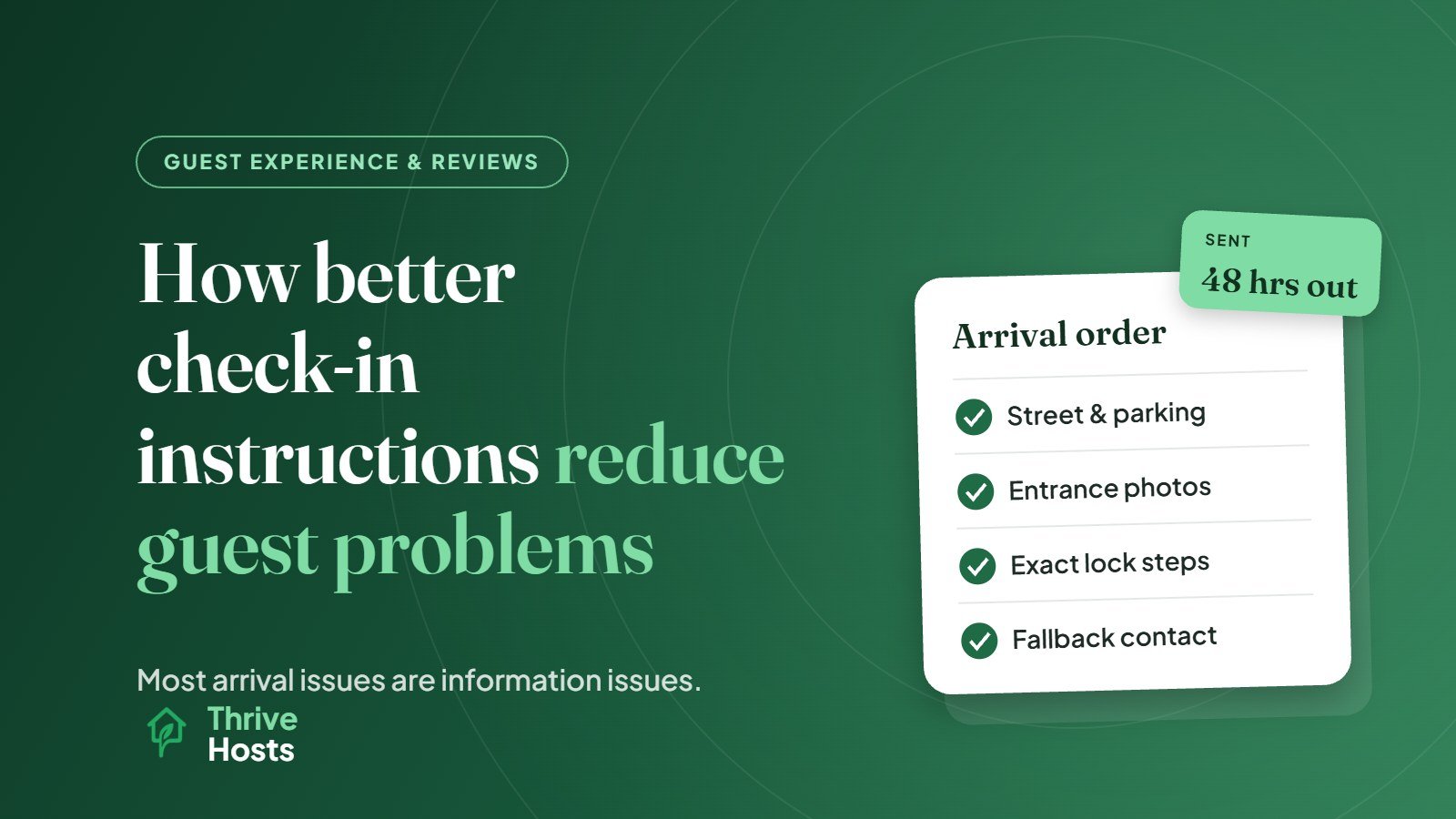
Start where the guest’s journey ends: the street. Then parking, then the building, then the door, then the inside. Each step should lead naturally to the next, so the guest can follow along on their phone without scrolling back and forth.
Use photos for every step that could confuse
A photo of the building entrance, the parking spot, the lockbox location and the keypad removes more confusion than any paragraph. Mark the right door with an arrow if there are several. Photos are especially useful where the address leads to a shared entrance or a gate.
Be precise about access
Give the exact steps for the lock: “Press the Yale logo to wake the keypad, enter the code, then press the tick.” If the door needs a firm push or the key must be turned twice, say so. These details are obvious to you and invisible to a first-time guest.
Include the first-hour essentials
Wi-Fi details, where the thermostat is and how to use it, where spare towels are, and anything that needs switching on. Keep it short. The full house guide can cover the rest of the stay.
Tell them what to do if something goes wrong
Every set of instructions should include a fallback: who to contact, how to reach them, and a backup entry option if the main method fails. This one line prevents the most stressful arrival situations.
Timing Matters as Much as Content
On Airbnb, guests are told that detailed check-in instructions and self check-in codes are provided 48 hours before the reservation starts. Many hosts also send a short reminder on the morning of arrival with the essentials: address, access steps and Wi-Fi. That way the instructions are near the top of the guest’s messages when they need them, rather than buried under days of conversation. Our guide on how to automate Airbnb guest messaging explains how to schedule these reliably.
For same-day and last-minute bookings, make sure the instructions still go out. Scheduled messages can be skipped if a booking arrives after the trigger time, so check that setting.
Plan for the Exceptions
The best instructions anticipate the guests who do not arrive at a normal time in a normal way:
- Late arrivals: add lighting notes, a reminder that the code works at any hour, and a contact for after-hours help.
- Early arrivals: explain whether early check-in is possible, where luggage can be left if not, and how they will know the property is ready.
- Lock failures: include the backup entry method and the number to call. Our article on how smart locks help remote Airbnb hosts covers how to plan for this.
- Accessibility: mention stairs, lifts and step-free routes.
Test Your Instructions With Someone New
The fastest way to find gaps is to ask someone who has never visited the property to follow your instructions exactly as written. Watch where they hesitate, what they ask, and where they get lost. Then fix those points. Repeat this after any change: a new lock, different parking rules, building works or a new entrance code for a shared door.
Keep Instructions and House Guide Separate
Check-in instructions should get the guest through the door and settled. The rest of the information, such as appliances, bins, local recommendations and checkout steps, belongs in your house manual. Mixing the two makes arrival instructions long and hard to follow. A focused arrival message is read; a long one is skimmed.
How This Shows Up in Reviews
Guests rate check-in as a separate category on Airbnb, and arrival experiences come up often in written reviews. Clear instructions are one of the most direct ways to protect that rating. If check-in comes up in your complaints, our guide to common guest complaints covers related prevention steps.
Getting Check-In Covered
Thrive Hosts handles arrival communication as part of remote Airbnb co-hosting: writing and maintaining check-in instructions, scheduling them on every platform, managing access codes, confirming the property is ready with your approved local cleaner, and answering guests in real time if something goes wrong.
You keep your property and accounts. We make sure guests get in smoothly and know who to call if they cannot.
Related reading: Handling early check-in and late checkout requests.
Get your check-in process reviewed
We will walk through your current arrival instructions as a first-time guest would and point out where people are likely to get stuck.
See How Airbnb Co-Hosting Works
Bruce J is the CEO of Thrive Hosts and leads the short-term rental team. He works on the operations and performance side of STR: guest communication, pricing and calendar discipline, turnovers, issue tracking and owner reporting across Airbnb, Vrbo and Booking.com. On the blog he writes practical, no-fluff guides for owners and operators who want their rentals to run more consistently.