Maintenance in a short-term rental is different from maintenance in a long-term let or your own home. The property is used harder, guests notice small problems quickly, and there is often only a few hours between one checkout and the next check-in to get anything fixed. A dripping tap that a tenant might tolerate for a month can turn into a three-star review after a single weekend.
Handling maintenance well comes down to four things: catching issues early, deciding quickly how urgent they are, getting the right local person to fix them, and keeping a record so the same problem does not keep coming back.
Reactive and preventive maintenance need different systems
Reactive maintenance is everything that breaks unexpectedly: a failed water heater, a blocked drain, a smart lock with a dead battery. Preventive maintenance is the scheduled work that stops those failures from happening as often, such as servicing the HVAC system, flushing the water heater, checking smoke and carbon monoxide detectors, deep cleaning appliances and inspecting outdoor areas before peak season.
Many hosts only have a system for the first type. They react well when something breaks but have no calendar for the second. Building a simple preventive schedule, even a spreadsheet with monthly, quarterly and annual tasks per property, reduces the number of emergencies you have to deal with mid-stay.
How issues usually get discovered
Most maintenance problems in an STR come to light in one of three ways:
- Cleaners during turnovers, who are often the first people to see a broken item, a slow drain or a stain on the carpet
- Guests during their stay, usually by message, and usually at the least convenient time
- Reviews after checkout, which is the worst possible way to find out
The goal is to shift as much discovery as possible to the first category. That means asking cleaners to report issues as part of every turnover, ideally with photos, rather than relying on them to mention things when they remember. A short “anything broken, missing or worn?” step in your turnover checklist does a lot of work here.
When a guest does report a problem during their stay, the response needs to be fast and clear. Our guide on what to do when a guest reports a problem during their stay covers that guest-facing side in detail.
Triage by urgency
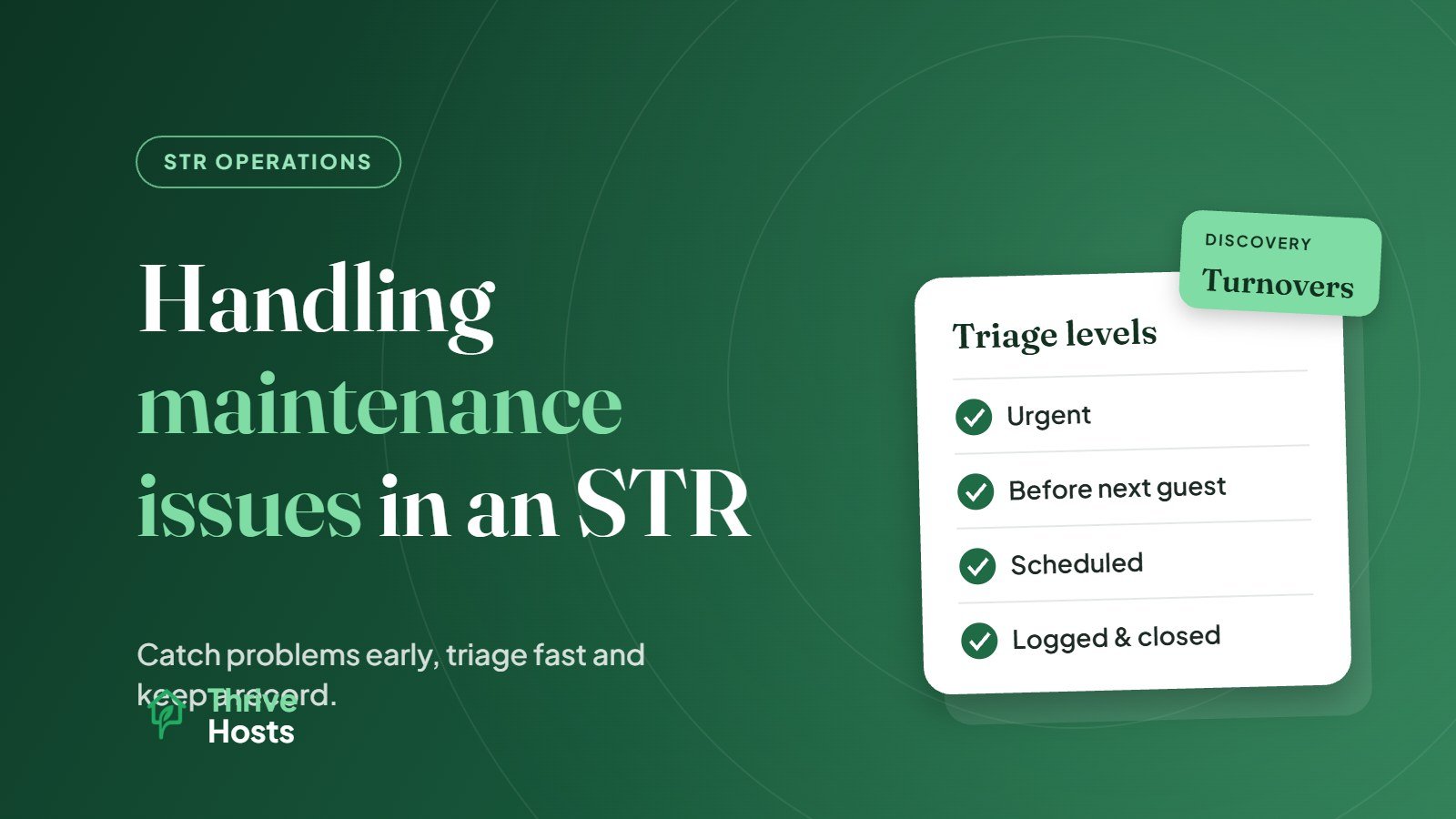
Not every issue needs the same response. A simple three-level approach works for most operations:
- Urgent: affects safety, security, access or basic habitability. No heat in winter, no water, a lock that will not open, a gas smell or a water leak. These need immediate action, and for genuine emergencies, the guest should be directed to local emergency services first.
- Before next guest: does not stop the current stay but must be fixed before the next check-in. A broken blind, a missing remote, a wobbly chair.
- Scheduled: cosmetic or minor wear that can wait for a planned maintenance visit. Scuffed paint, a loose cabinet hinge, worn outdoor furniture.
Writing these levels down, with examples, helps everyone involved make the same call. It also stops the common mistake of treating every issue as urgent, which burns out vendors and inflates costs.
Build a reliable local vendor list
Remote hosts in particular depend on having trusted local people ready before something breaks. At minimum, most properties need a go-to handyperson, a plumber, an electrician, an HVAC technician and a locksmith or access specialist. For pools, hot tubs, septic systems or large gardens, add the relevant specialists.
For each vendor, note their contact details, typical response time, whether they can access the property without you being there, how they invoice and whether they will send photos when the job is done. Having a backup for the most common trades is worth the effort, because your first choice will not always be available on a Saturday in peak season.
Schedule repairs around guests
Repairs need to fit the booking calendar. Where possible, book non-urgent work into vacant nights or turnover windows, and let your cleaner know if a vendor will be on site. If a repair has to happen during a stay, tell the guest in advance, confirm the time window and make sure the vendor knows the visit is in an occupied property.
Access matters here too. If you use a smart lock, issuing a temporary code for a vendor is much easier than arranging a key handover. Our article on smart locks for remote Airbnb hosts covers that setup.
Log every issue
Every maintenance issue should be logged: what happened, when, who reported it, who fixed it, what it cost and whether it is closed. This record pays off in several ways. It shows recurring problems, such as the same toilet running every few weeks, that point to a bigger fix. It helps with budgeting. It makes damage claims easier to support. And it gives you an honest view of whether a property’s maintenance costs are reasonable for what it earns.
If you are building procedures across your operation, maintenance reporting and escalation are worth writing into your STR operations SOP alongside turnovers and guest messaging.
Who coordinates the work
Someone has to own the process between “issue reported” and “issue closed”. For owners who live nearby, that may be you. For remote owners or growing portfolios, it is often a co-host or operations partner who logs issues, contacts your approved local vendors, schedules access and follows up until the job is done, while you keep approval over spending.
Related reading: Tracking tasks for cleaners and vendors.
Need help staying on top of maintenance from a distance?
Thrive Hosts supports STR owners remotely with issue tracking, vendor communication and scheduling around bookings. We coordinate with your approved local vendors; you stay in control of approvals and spending.
Explore STR Operations Support
Bruce J is the CEO of Thrive Hosts and leads the short-term rental team. He works on the operations and performance side of STR: guest communication, pricing and calendar discipline, turnovers, issue tracking and owner reporting across Airbnb, Vrbo and Booking.com. On the blog he writes practical, no-fluff guides for owners and operators who want their rentals to run more consistently.