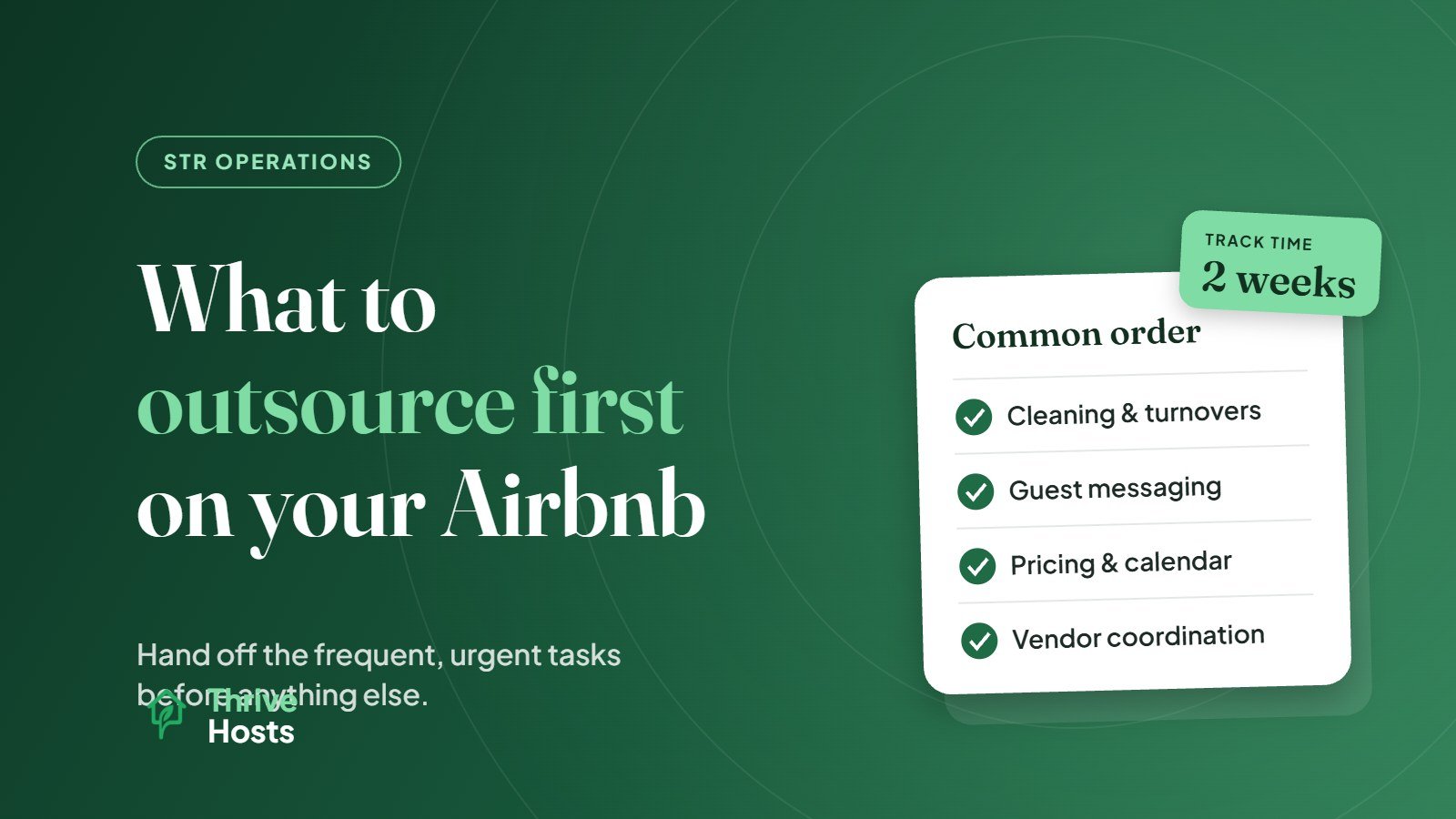
For most Airbnb hosts, the first thing to outsource is cleaning and turnovers, followed closely by guest communication. Those two tasks are frequent, time-sensitive and hard to do well from a distance. Pricing, listing management, maintenance coordination and reporting usually come next, depending on where your time actually goes and where mistakes are costing you.
That is the short answer. The better answer depends on your situation, because the right first handoff for a host who lives ten minutes away is not the same as for an owner managing a cabin from another country.
Start by tracking where your time goes
Before outsourcing anything, spend two weeks writing down every task you do for the property and roughly how long it takes. Include the small things: answering a guest question at 10 pm, chasing a cleaner for photos, adjusting prices before a holiday weekend, reordering coffee pods.
Most hosts are surprised by the results. The big tasks are not always the problem. It is often the constant small interruptions, especially messages and coordination, that make hosting feel like a second job.
Once you have that list, sort each task by three questions: how often does it happen, how urgent is it when it happens, and how much does it hurt when it is done badly? The tasks that score high on all three are your outsourcing candidates.
1. Cleaning and turnovers
If you are still cleaning the property yourself, this is almost always the first thing to hand off. Turnovers happen after every stay, they are physically demanding, and they have a hard deadline. A professional local cleaner also tends to be more consistent, especially if you give them a clear standard to work to.
Outsourcing cleaning does not remove all the work, though. Someone still has to schedule cleaners around the booking calendar, confirm turnovers were completed, check photos, track supplies and follow up on damage. That coordination layer is often the next thing owners look to hand off.
2. Guest communication
Guest messaging is the task that most often eats into personal time. Questions arrive before booking, after booking, on arrival day and during the stay, and many guests expect quick replies. Airbnb also shows a host’s response rate and response time on their profile, which is covered in more detail in our guide to Airbnb host response time.
Automated scheduled messages can handle a lot of the routine flow, but they do not replace someone who can read a message, understand the context and respond sensibly. Our article on Airbnb automation vs human management looks at where that line usually sits. Handing off guest communication tends to give owners back the most mental space for the time it costs.
3. Pricing and calendar management
Pricing is easy to set once and forget. That is the problem. Rates that made sense in one season stay live into the next, gap nights go unfilled and minimum stays drift away from what the market supports. If you have noticed that your prices only change when you remember to look at them, this is a good candidate for outside help, either through a pricing tool with someone actively reviewing it or through a person who owns the calendar.
4. Maintenance and vendor coordination
You will still need local people for repairs and maintenance. What you can outsource is the coordination: logging issues, contacting your approved vendors, scheduling access between guest stays and following up until the job is closed. This matters most for remote owners, because a small problem left unmanaged between bookings can quickly become a guest complaint.
5. Listing management and reporting
Listing updates, photo order, review responses and monthly performance summaries are lower urgency but easy to neglect. They are often bundled into a broader co-hosting or operations support arrangement rather than outsourced on their own.
What you should probably keep
Outsourcing operational work does not mean handing over ownership decisions. Most owners keep control of their accounts, their payout setup, major spending decisions, and the final say on pricing strategy and house rules. A good arrangement makes your decisions easier to act on rather than replacing them.
Outsourcing one task vs bringing in a co-host
If only one area is causing trouble, outsourcing that task on its own can be enough. If several are, piecing together a cleaner, a messaging service, a pricing tool and a handyman can create a new coordination problem. At that point, it may make more sense to look at a co-host or operations partner who covers the recurring work together. Our guides on when to hire an Airbnb co-host and the difference between an Airbnb co-host and a property manager can help you decide which model fits.
Not sure what to hand off first?
Thrive Hosts provides remote Airbnb co-hosting and STR operations support, including guest messaging, pricing and calendar management, and coordination with your approved local cleaners and vendors. We can look at your current setup and suggest where support would help most.
See How Airbnb Co-Hosting Works
Bruce J is the CEO of Thrive Hosts and leads the short-term rental team. He works on the operations and performance side of STR: guest communication, pricing and calendar discipline, turnovers, issue tracking and owner reporting across Airbnb, Vrbo and Booking.com. On the blog he writes practical, no-fluff guides for owners and operators who want their rentals to run more consistently.