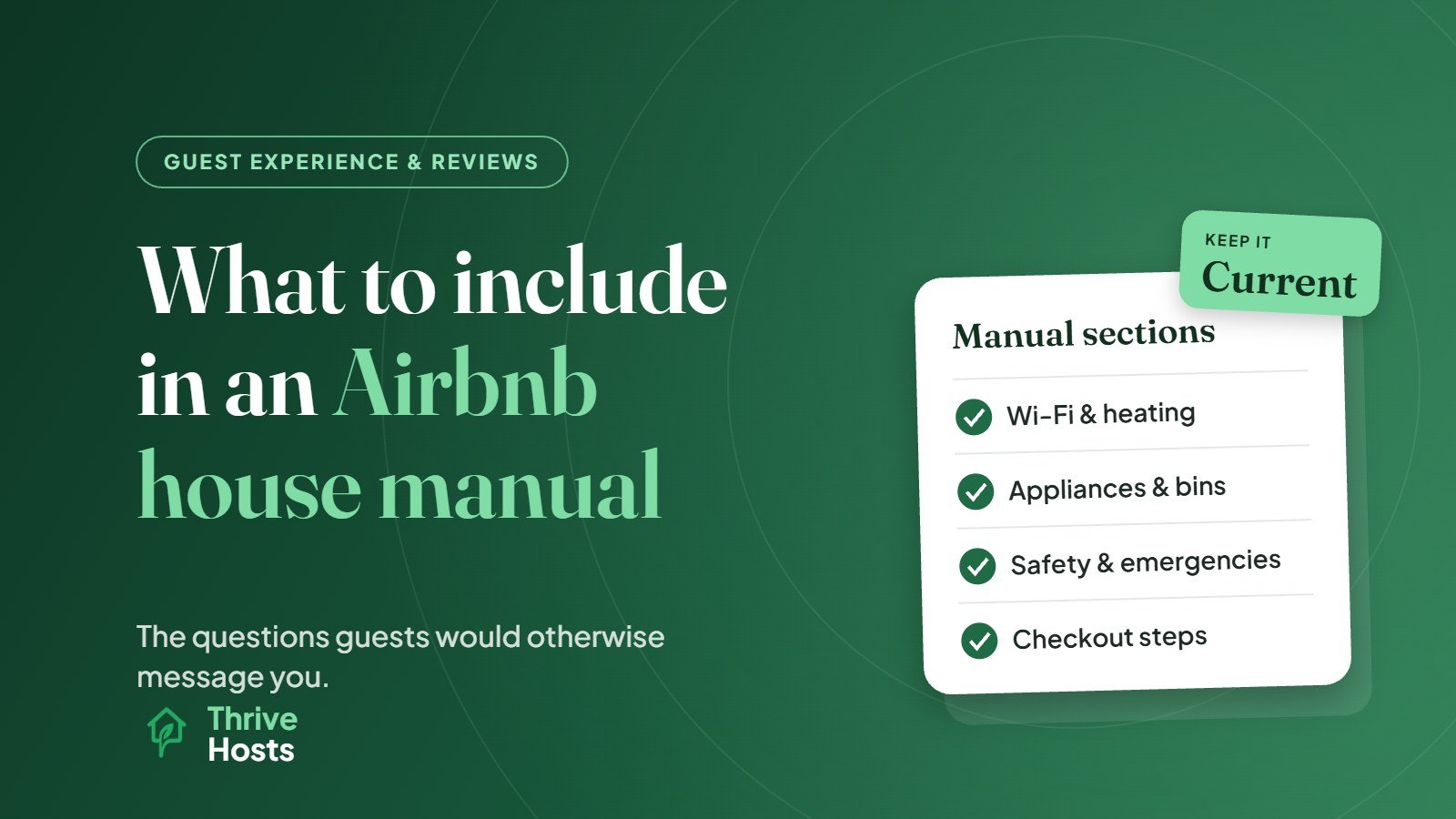
An Airbnb house manual should cover everything a guest needs to use the property comfortably once they are inside: Wi-Fi, heating and cooling, appliances, bins and recycling, house rules in practical terms, what to do in an emergency, and how checkout works. The best manuals are short, organised by what guests actually need, and answer the questions that would otherwise arrive in your inbox.
On Airbnb, the house manual sits in the Arrival guide section of the listing editor and, according to Airbnb’s help center, is only available to guests with a confirmed reservation. Many hosts also keep a printed or digital copy in the property.
The free house manual builder turns a few notes about your property into an organized manual, with placeholders instead of passwords.
A house manual is different from check-in instructions. Check-in instructions get the guest from the street to the sofa. The house manual helps them for the rest of the stay. Keeping the two separate means neither becomes too long to read. If you are working on the arrival side, see how better check-in instructions reduce guest problems.
The Essentials: What Every Manual Needs
Wi-Fi and entertainment
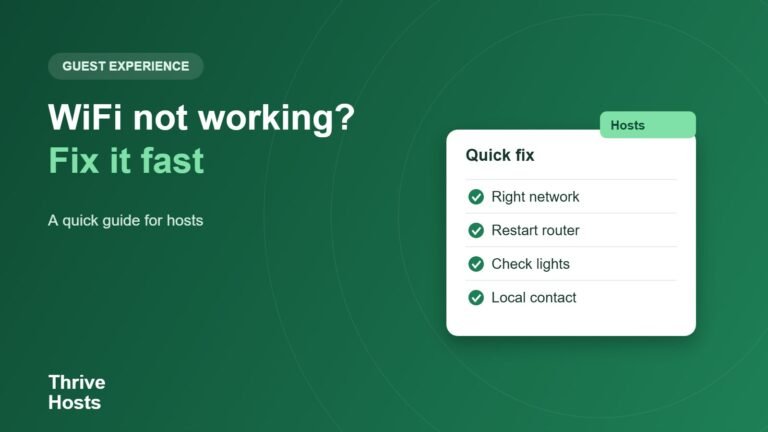
Network name and password, where the router is, how to restart it, and how the TV and streaming services work. If guests need to log in to their own accounts on smart TVs, explain how to log out before leaving.
Heating, cooling and hot water
Where the thermostat or controls are, how to adjust them, how long heating takes to warm up, and anything unusual about the hot water system. Temperature problems are a common source of guest messages and complaints, so be specific.
Kitchen and appliances
How to use the oven, hob, dishwasher, washing machine, coffee machine and any appliance that is not obvious. Note where cleaning supplies, spare bin bags and dishwasher tablets are kept. Photos of control panels help more than paragraphs.
Bins and recycling
Which bin is for what, where outdoor bins are, and which day collections happen. Local rules vary widely, and guests from elsewhere will not know them.
Parking and getting around
Parking rules and permits if needed, nearest public transport, taxi or rideshare pickup points, and anything that catches guests out, such as narrow driveways or restricted street parking.
House Rules in Practical Terms
Your listing should state house rules before booking. The manual is where you explain how they apply day to day: quiet hours and why they matter in this building, where smoking is permitted if anywhere, rules for pets, the hot tub or pool, and guest limits. Keep the tone friendly and factual rather than a list of prohibitions.
Airbnb has been tightening its rules on what hosts can require of guests, particularly around checkout requests and separate agreements. If you have not reviewed your rules recently, our summary of Airbnb’s house rules update is worth reading before you finalise the manual.
Safety and Emergencies
This section should be easy to find and impossible to misunderstand:
- Local emergency number and the property’s full address.
- Location of the fire extinguisher, first-aid kit, fuse box and water stop valve.
- Smoke and carbon monoxide alarm locations.
- What to do in a power cut, water leak or lockout.
- Who to contact for urgent problems, and how.
Guests rarely need this section. When they do, they need it immediately.
Checkout
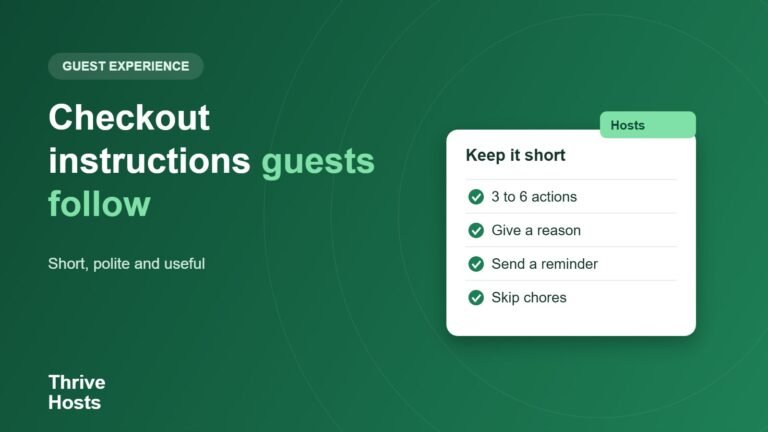
Give a short, clear checkout list: time, what to do with keys or the lock, and any small, reasonable requests such as putting rubbish in the bins. Keep it brief. Long checkout chore lists are a common guest complaint, as covered in our guide to common guest complaints.
The Local Guide (Optional but Valued)
A handful of genuine recommendations, such as a good café for breakfast, the nearest supermarket and pharmacy, a reliable restaurant, a walk or beach, adds warmth without much effort. Keep it current and personal rather than copying a tourist list. Airbnb also has a separate guidebook feature for local recommendations if you prefer to keep them out of the manual.
How to Make It Easy to Use
- Organise by topic, with clear headings, so guests can jump to what they need.
- Use photos for controls, switches and anything with buttons.
- Keep sentences short and avoid technical jargon.
- Put the top five questions first: Wi-Fi, heating, parking, bins and checkout cover most guest needs.
- Offer it in more than one place: Airbnb’s house manual, a link in your check-in message, and a printed copy or QR code in the property.
Keep It Up to Date
An outdated manual is worse than none, because guests trust it. Review it whenever something changes: a new appliance, a new Wi-Fi password, changed bin days, a new lock. Ask your cleaner to flag anything they notice guests struggling with, and read your guest messages for repeated questions. Each repeated question is a gap in the manual.
Getting Guest Information Managed
Thrive Hosts helps owners keep guest-facing information accurate and useful as part of remote Airbnb co-hosting: house manuals, check-in instructions, automated messages and listing details, kept in sync across platforms and updated when anything changes at the property.
You keep your property and accounts. We make sure the information guests rely on is clear and current.
Related reading: Checkout instructions guests follow and WiFi problems and fast fixes.
Get your guest information reviewed
We will review your house manual and arrival information against the questions guests actually ask, and show you what is missing or out of date.
See How Airbnb Co-Hosting Works
Bruce J is the CEO of Thrive Hosts and leads the short-term rental team. He works on the operations and performance side of STR: guest communication, pricing and calendar discipline, turnovers, issue tracking and owner reporting across Airbnb, Vrbo and Booking.com. On the blog he writes practical, no-fluff guides for owners and operators who want their rentals to run more consistently.