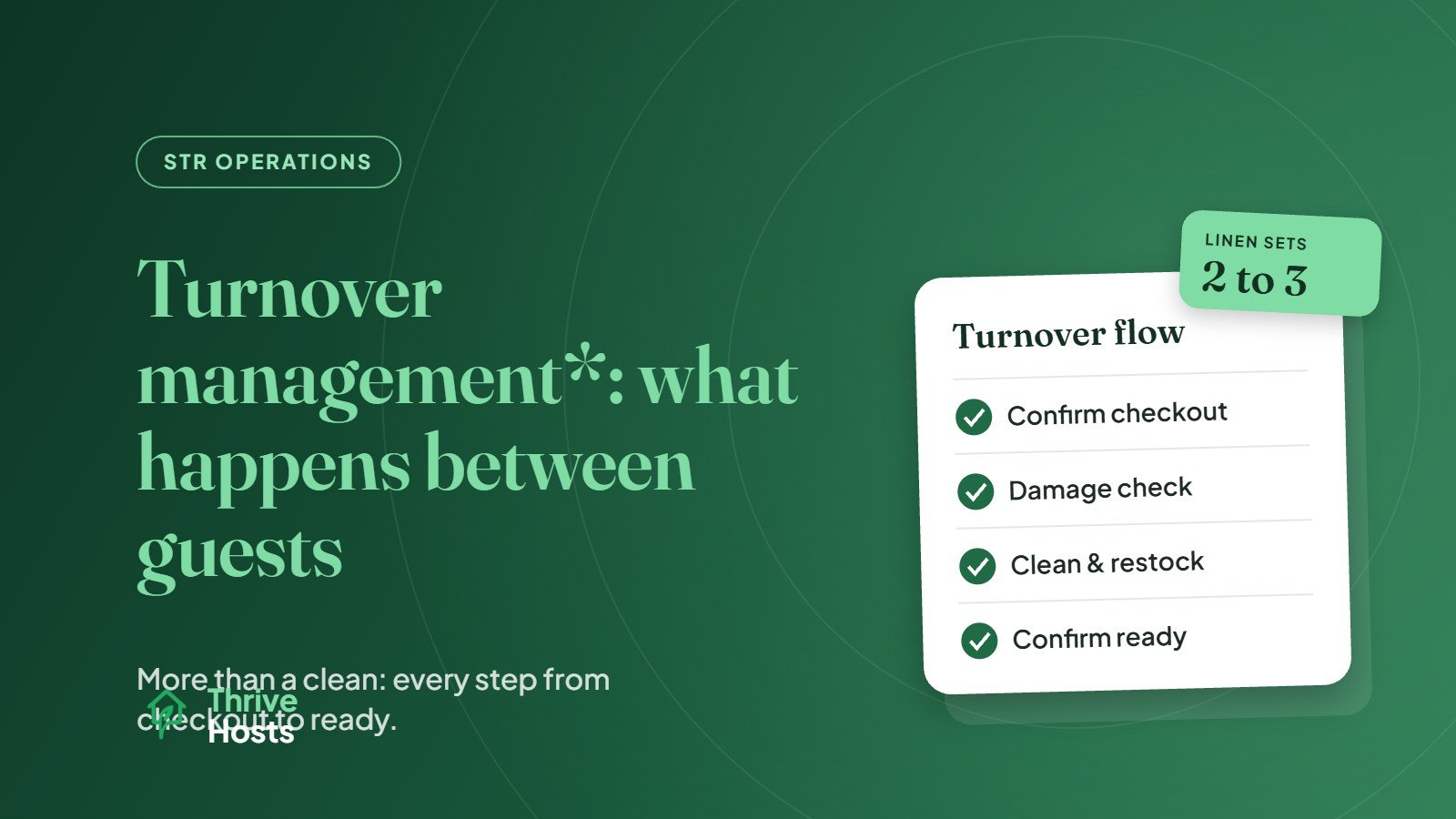
A short-term rental turnover is everything that happens between one guest checking out and the next guest checking in: confirming the checkout, cleaning, laundry, restocking, checking for damage, resetting access, staging the space and confirming the property is ready. Cleaning is the biggest part, but treating turnover as “just the clean” is where most problems start.
Good turnover management makes every arrival feel the same, regardless of who cleaned, how tight the window was or how the previous guest left the place. Here is what should happen, roughly in order.
Two free tools can help here: the turnover checklist builder for a room-by-room list your cleaner can follow, and the cleaning fee calculator to see what each turnover really costs.
1. Confirm the checkout
The turnover starts before anyone arrives at the property. Confirm the departing guest has actually left, ideally through a checkout message, a smart lock log or a quick note from the cleaner on arrival. Late checkouts are one of the most common causes of rushed turnovers, so knowing early gives you time to adjust.
This is also the moment to flag anything the guest mentioned during the stay, such as a spill, a broken item or something they could not find, so the cleaner knows to check it.
2. First walkthrough and damage check
Before cleaning starts, the cleaner should do a quick walkthrough and photograph anything unusual: damage, missing items, excessive mess, signs of extra guests or a party, or anything that breaches house rules. Doing this before cleaning matters, because once a room is cleaned, the evidence is gone.
Airbnb asks hosts to file a damage reimbursement request through the Resolution Center within 14 days of the responsible guest’s checkout, supported by evidence such as photos. A prompt, photographed damage check is therefore part of protecting yourself, not just tidying up. Airbnb’s help article on damage reimbursement has the current process, which is worth reviewing as terms can change.
3. Cleaning to a written standard
The clean itself should follow a written standard, room by room, with reference photos showing what “ready” looks like. Kitchens and bathrooms get the most guest scrutiny, along with bed linens, floors and anything guests touch frequently. A standard also makes it far easier to bring in a backup cleaner without quality dropping.
4. Laundry and linen rotation
Linen is often the bottleneck in tight turnovers. Most operations keep at least two to three full sets of linens and towels per bed and bathroom, so one set can be on the beds, one in the wash and one ready as backup. Stains and wear should be logged and replaced before they become a guest complaint.
5. Restock consumables
Toilet paper, soap, shampoo, dish soap, coffee, tea, bin bags, cleaning supplies and any welcome items should be checked against a par level and restocked. The cleaner should record what is running low so the next supply order happens before anything runs out entirely.
6. Small fixes and maintenance flags
Cleaners are often the first people to notice that a bulb has gone, a drawer is sticking or the dishwasher is not draining. Simple items can be handled on the spot if the cleaner is comfortable doing so. Anything else should be logged and escalated, with an urgency level, so it can be scheduled with a local vendor. Our guide on handling maintenance issues in a short-term rental covers that process.
7. Reset access and technology
If you use a smart lock, the next guest’s code should be active and the previous one removed. Check that the Wi-Fi is working, the TV and streaming apps are logged out of the previous guest’s accounts, the thermostat is set to a sensible temperature and any remotes are where they should be.
8. Stage the space
Staging is the final pass: beds made consistently, towels folded the same way, curtains open, lights in the right state and any welcome note or guidebook in place. Guests often form their first impression in the first minute inside, and that impression tends to show up in reviews.
9. Confirm the property is ready
The turnover is not complete until someone confirms it is. A short set of completion photos from the cleaner, sent to whoever manages the property, closes the loop. Without that confirmation, problems are discovered by the next guest instead of by you.
Where turnovers usually go wrong
Most turnover failures are coordination failures rather than cleaning failures. The cleaner was not told about a same-day check-in. The linen was still in the dryer. A damage issue was mentioned in a message thread nobody passed on. A late checkout squeezed a three-hour clean into ninety minutes.
That is why turnover management is really an operations task. Someone has to connect the booking calendar, the cleaner’s schedule, the issue log and the guest messages so each turnover starts with the right information. Back-to-back bookings make this especially important; see our guide on coordinating cleaners for back-to-back Airbnb bookings for that scenario. If you are documenting the whole process, it fits naturally into your STR operations SOP.
Want turnovers that run without you chasing them?
Thrive Hosts coordinates turnovers remotely, scheduling your approved local cleaners around the booking calendar, tracking completion photos and logging issues for follow-up. Your cleaners do the on-site work; we keep the process connected.
Explore STR Operations Support
Bruce J is the CEO of Thrive Hosts and leads the short-term rental team. He works on the operations and performance side of STR: guest communication, pricing and calendar discipline, turnovers, issue tracking and owner reporting across Airbnb, Vrbo and Booking.com. On the blog he writes practical, no-fluff guides for owners and operators who want their rentals to run more consistently.