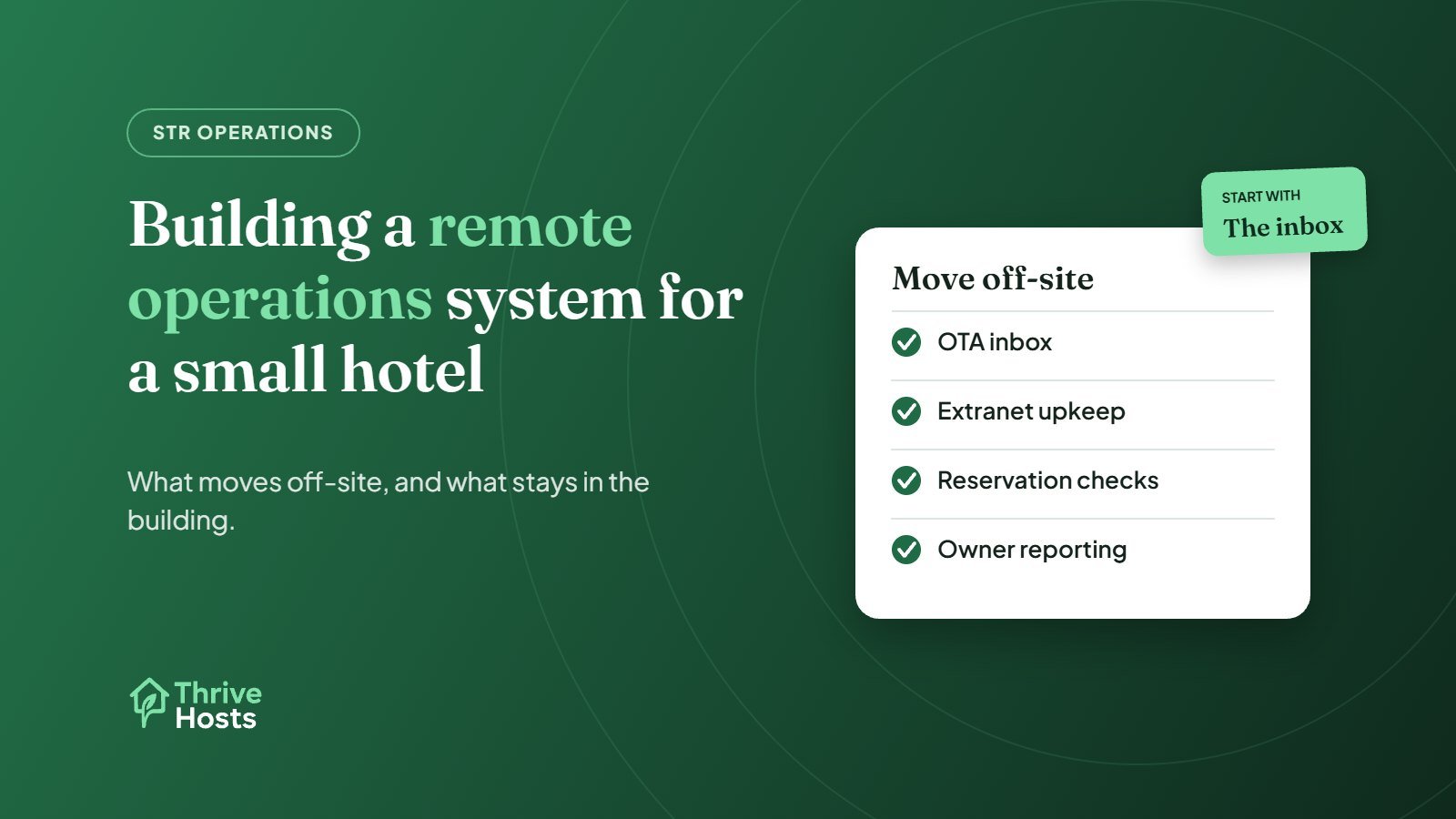
A remote operations system for a small hotel is a clear split between the work that has to happen in the building and the work that does not, with routines that connect the two. Check-ins, housekeeping and repairs need people on site. The OTA inbox, extranet upkeep, reservation checks, review replies, issue follow-up and reporting do not. When that second group is organised and owned, often by a remote team, the on-site staff can focus on guests and rooms.
This guide explains how to set that up without losing control of the property.
Step 1: List the work and where it has to happen
Write down everything that happens in a normal week and mark each task as on-site or remote. For most independent hotels and motels, the remote list is longer than expected:
- Answering guest messages on Booking.com, Expedia, Airbnb and email
- Checking new reservations, special requests and payment issues
- Keeping OTA content, room types and policies accurate
- Checking availability, rates and restrictions across channels
- Passing early arrivals, late checkouts and room moves to housekeeping
- Logging guest-reported problems and chasing them with maintenance
- Replying to reviews
- Preparing a weekly summary for the owner or GM
The on-site list usually covers front-desk service, keys and access, housekeeping, laundry, inspections, repairs and emergencies.
Step 2: Choose one system of record
Remote work only functions if everyone sees the same information. That normally means a PMS with a connected channel manager, so reservations, room status and guest details live in one place, and individual user accounts for anyone who needs access. Our guide to PMS and channel managers for small hotels covers the choice. Avoid shared passwords; give each person or partner their own login with the permissions they need.
Step 3: Write the routines down
Each recurring task needs a short written routine: what happens, when, and who owns it. Examples include the morning reservation check, the evening handover, the weekly availability check and the monthly extranet review. Our articles on managing Booking.com reservations and OTA inbox management include routines you can adapt.
Step 4: Agree escalation rules
The most important document in a remote setup is the escalation sheet. It says who is contacted for what, in what order, and what the remote side can decide alone. A guest locked out at night goes to the on-call manager. A dripping tap goes into the maintenance log. A refund request above an agreed amount goes to the owner. Emergencies go to local emergency services first. Our article on handling guest issues without a 24-hour front desk covers this in detail.
Step 5: Connect remote work to housekeeping
Housekeeping is where remote and on-site work meet most often. Decide how the remote side passes information to housekeeping, such as arrival times, requests and guest-reported issues, and how housekeeping reports room status and problems back. A daily room list and one reporting channel are usually enough. See how to coordinate housekeeping in a small hotel.
Step 6: Report weekly
A short weekly report keeps the owner in control without reading every message. It should cover open issues and their status, guest feedback themes, OTA or listing problems found, housekeeping exceptions, and decisions needed. Keep it to one page. The point is visibility, not volume.
Step 7: Start with one area
Do not move everything at once. Most properties start with the OTA inbox, because it is time-sensitive, repetitive and easy to measure. Once that runs smoothly, add extranet upkeep and reservation checks, then housekeeping coordination and reporting. Each step should make the on-site team’s day easier, not add another system to check.
What stays with you
A remote system does not mean handing over the property. Pricing decisions, policies, spending, staff management and anything physical stay with the owner and the on-site team. The remote side runs the routines and brings decisions back to you.
This is how our remote operations support for boutique hotels and motels works in practice. If you want an outside view of your current setup first, an operations review looks at your channels, inbox, housekeeping flow and reporting, and sets out what would make sense to move off-site.
Ready to take the repetitive work off your small team?
Thrive Hosts provides a dedicated remote operations team for independent hotels, motels and inns: OTA inbox, extranets, reservation checks, housekeeping coordination, reviews and owner reporting.
Book a Hotel Operations Review
Bruce J is the CEO of Thrive Hosts and leads the short-term rental team. He works on the operations and performance side of STR: guest communication, pricing and calendar discipline, turnovers, issue tracking and owner reporting across Airbnb, Vrbo and Booking.com. On the blog he writes practical, no-fluff guides for owners and operators who want their rentals to run more consistently.