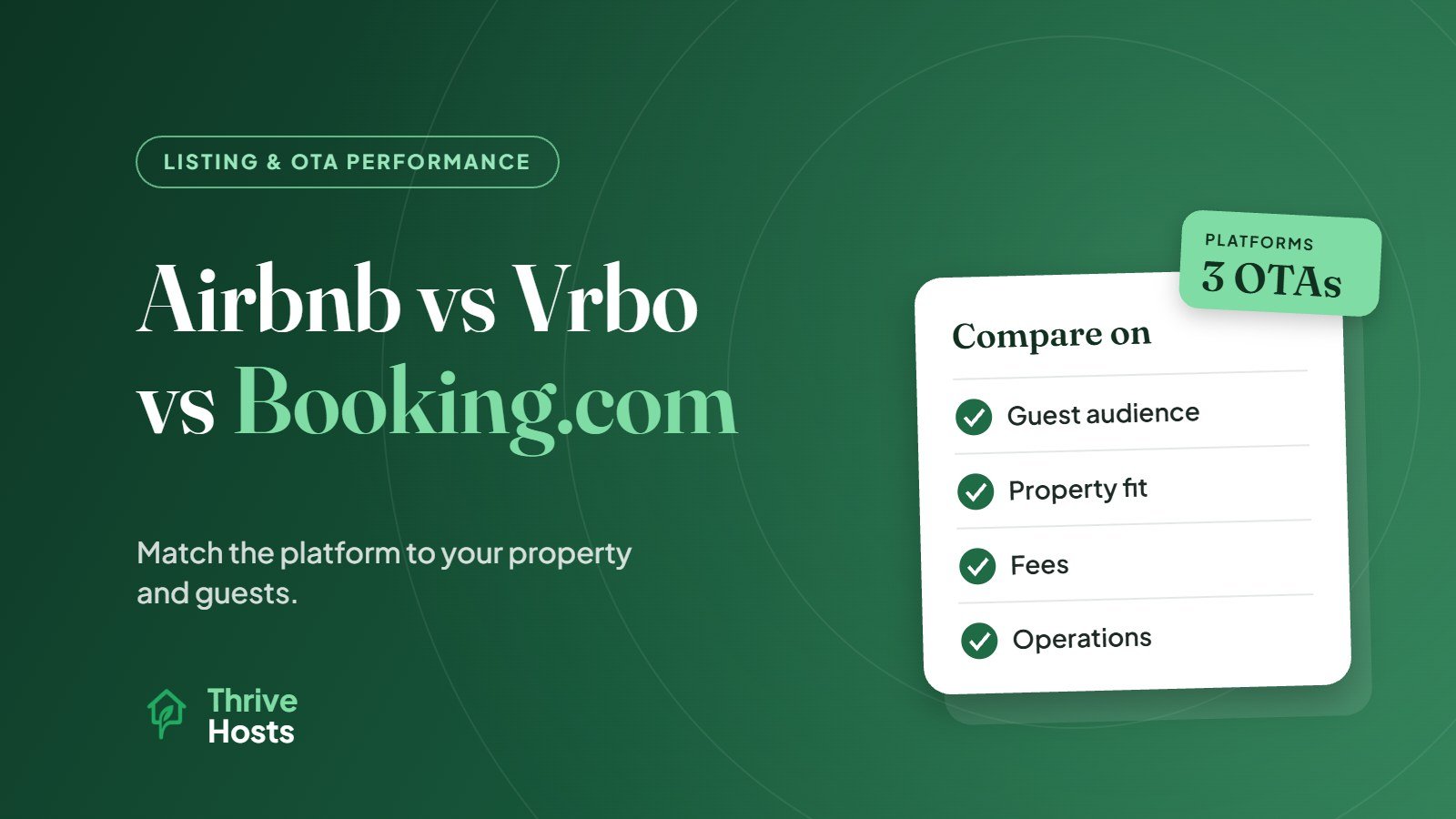
Airbnb, Vrbo and Booking.com can all work for short-term rentals, but they suit different properties and guests. As a broad rule, Airbnb has the widest reach across property types and trip styles, Vrbo leans toward whole homes for families and groups, and Booking.com is strongest for short city stays, international travellers and guests who already use it for hotels. The right choice depends on your property, your market and how much operational complexity you can manage.
Here is how the three compare on the points that matter most to owners.
To compare the costs on a real booking, use the free Vrbo fee calculator and Booking.com commission calculator alongside the Airbnb host fee calculator.
Who books on each platform
Airbnb attracts a broad mix of guests: couples, friends, families, remote workers and solo travellers, booking everything from a single room to a large villa. Guests often browse by experience and location as much as by price, and many come specifically looking for something different from a hotel.
Vrbo focuses on whole-home rentals. Its audience skews toward families and groups planning leisure trips, often booked further in advance and often for longer stays. Shared spaces and private rooms are not a fit for Vrbo the way they are for Airbnb.
Booking.com started as a hotel platform and still feels like one in many ways. Its guests tend to compare quickly, filter heavily and expect hotel-like clarity on check-in, fees and cancellation. It is especially strong for city apartments, short stays and international travel.
Which property types fit best
A family beach house with five bedrooms will usually find a natural audience on Vrbo and Airbnb. A one-bedroom city apartment may perform well on Airbnb and Booking.com but get less from Vrbo. A cabin or unique stay often does best on Airbnb, where guests actively look for character properties. Boutique hotels and aparthotels with multiple similar units often fit Booking.com’s structure well.
These are tendencies, not rules. Local demand varies, so it is worth looking at how comparable properties in your area are listed and how busy their calendars appear across platforms.
Fees and commissions
All three platforms charge for bookings, and the structures have changed recently, so always check the current terms in your own dashboard.
Airbnb has moved most hosts to a single host-only service fee that is deducted from the payout, rather than the older split between host and guest. Airbnb’s help center lists the current rates for your region and setup.
Vrbo announced it is retiring its subscription model and moving hosts to pay-per-booking, with a commission that, according to Expedia Group’s announcement, includes payment processing and generally falls between 12% and 15% depending on region, with changes starting October 29, 2026.
Booking.com charges a commission on each booking that varies by location, and optional programmes such as Genius or the Preferred Partner Programme can change the effective cost.
The practical takeaway is that the fee percentage alone rarely decides the question. A platform with a higher fee but steady bookings can still outperform a cheaper one that leaves the calendar empty.
Control, policies and guest screening
Airbnb and Vrbo give hosts a familiar set of tools: house rules, cancellation policy choices, guest profiles and reviews from previous hosts on Airbnb, and booking requests where Instant Book is off. Booking.com works more like a hotel channel, with rate plans, structured policies and less emphasis on host-guest profiles. Owners who rely heavily on screening guests before accepting a booking sometimes find Booking.com less comfortable at first.
Operational differences
Each platform has its own messaging inbox, review system, payout timing and settings. Managing one is straightforward. Managing two or three means keeping prices, availability, house rules and content aligned, and responding in several places. That is manageable, but it needs a reliable system. Double bookings and inconsistent information are the most common problems when owners add channels without one.
If you run a small hotel or motel rather than a rental, our hotel and motel operations support covers the OTA inbox, extranets and housekeeping coordination across these channels.
So where should you list?
For most owners starting out, Airbnb is the logical first platform because of its reach and flexibility. Vrbo is often the strongest second channel for whole homes aimed at families and groups. Booking.com is worth considering for city properties, short-stay demand, international markets or multi-unit operations.
If you are weighing whether to add a second or third platform at all, our guide on whether to list your STR on multiple OTAs covers the tradeoffs. If you already list on Vrbo or Booking.com, our platform-specific guides on Vrbo listing optimization and Booking.com listing optimization can help you get more from each.
Not sure which platforms fit your property?
Thrive Hosts manages listings across Airbnb, Vrbo and Booking.com remotely, including setup, pricing, calendar sync and guest messaging. We can review your property and market and suggest a channel mix that suits it.
Discuss Your Property
Bruce J is the CEO of Thrive Hosts and leads the short-term rental team. He works on the operations and performance side of STR: guest communication, pricing and calendar discipline, turnovers, issue tracking and owner reporting across Airbnb, Vrbo and Booking.com. On the blog he writes practical, no-fluff guides for owners and operators who want their rentals to run more consistently.