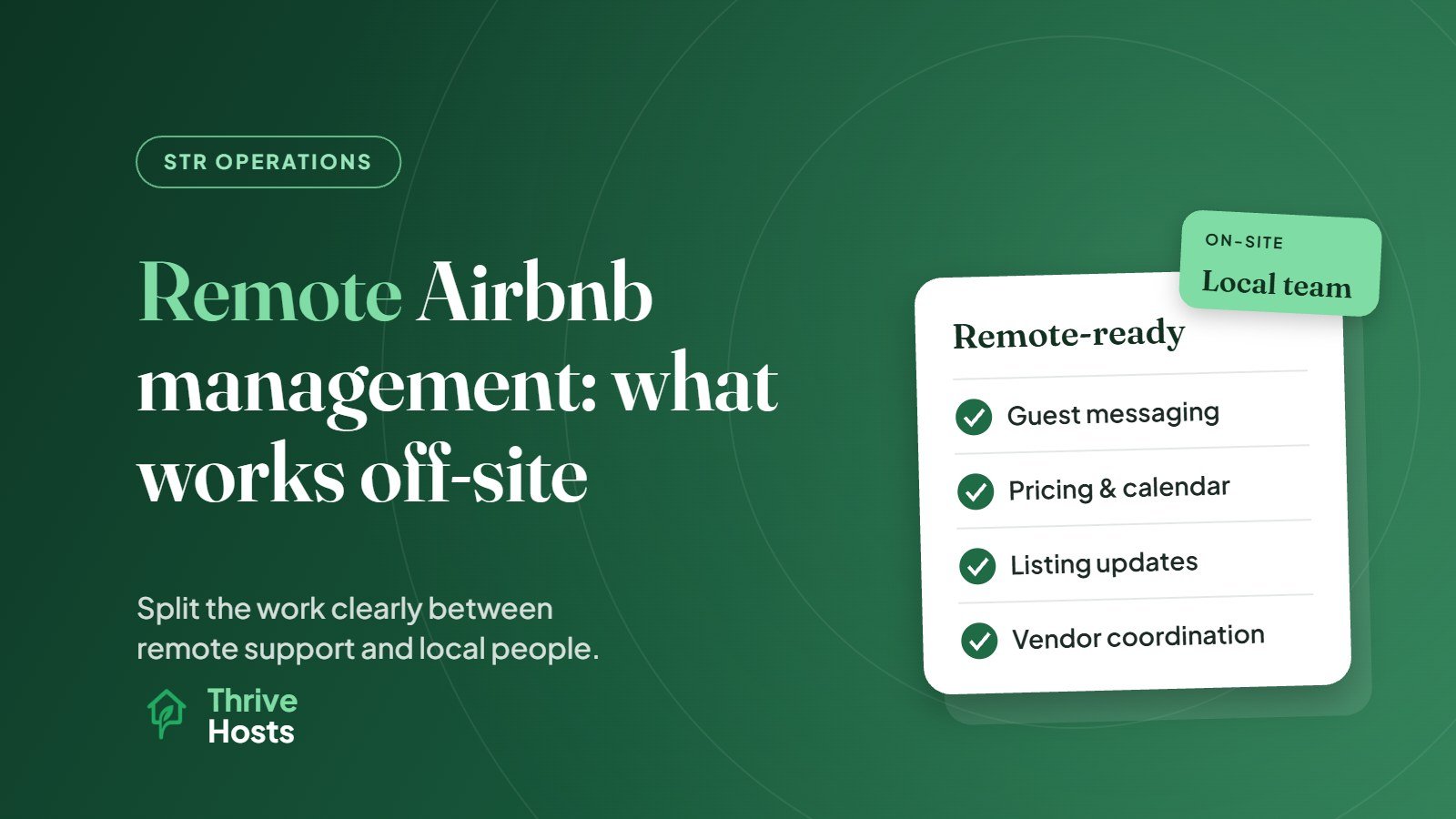
A large share of Airbnb management can be done from anywhere: guest messaging, pricing, calendar control, listing updates, review responses, scheduling cleaners, coordinating vendors and owner reporting. What cannot be done off-site is the physical work itself. Someone local still has to clean, restock, inspect, repair and respond in person when a situation needs hands on the ground.
The useful question is not whether you can manage an Airbnb remotely. Plenty of owners do. It is how to split the work clearly between remote management and local people so nothing falls into the gap between them.
What can be managed remotely
These tasks depend on information, communication and decisions rather than physical presence. With the right access and tools, they can be handled just as well from another city or another country.
Guest communication
Answering enquiries, sending booking confirmations and pre-arrival messages, sharing check-in instructions, handling mid-stay questions and following up after checkout are all remote tasks. Response speed matters more than location here.
Pricing and calendar management
Setting nightly rates, adjusting for seasons and events, managing minimum stays, filling gap nights and keeping calendars synced across platforms can all be done online. Pricing tools help, but someone still needs to review what they are doing.
Listing management
Updating titles, descriptions, amenities, house rules and photo order, plus monitoring how the listing is performing, are entirely remote tasks. So is responding to reviews.
Coordination and scheduling
This is the bridge between remote and local work. Scheduling cleaners around the booking calendar, confirming turnovers were completed, logging issues, contacting your approved local vendors and following up until jobs are closed can all be handled remotely, as long as the local people are in place.
Reporting and admin
Tracking occupancy, average daily rate and revenue, reconciling payouts, monitoring recurring issues and preparing owner reports are all desk work.
What cannot be managed remotely
These tasks need a physical person at the property. No software or remote team can replace them.
- Cleaning and turnovers, including laundry, restocking and staging
- Physical inspections, such as checking for damage after a stay or assessing a reported problem
- Repairs and maintenance, from a blocked drain to an HVAC service
- Key handovers or lockouts where there is no smart lock or self check-in option
- On-site emergency response, where the right first contact for genuine emergencies is local emergency services
- Deliveries and bulk supply drops that need someone to receive and put away stock
Some owners also prefer a local person for things like periodic deep cleans, seasonal setup and photographing the property for the listing.
The gray areas
A few tasks sit in between and depend on how the property is set up.
Check-in can be fully remote if the property has a smart lock, keypad or lockbox and clear instructions. Without them, it needs a person. Our comparison of self check-in vs host check-in covers the tradeoffs.
Issue diagnosis can often start remotely, using photos or video from the guest or cleaner, but some problems can only be confirmed by someone on site.
Quality control can be partly remote through photo checklists from cleaners, but periodic in-person checks still catch things photos miss.
How to make the split work
Remote management works when there is a clear handoff between the person coordinating and the people on the ground. In practice, that means:
- A reliable local cleaner, ideally with a backup who already knows the property
- A short list of approved local vendors for common repairs
- Self check-in, so access does not depend on someone being there
- A turnover process that includes photo confirmation and issue reporting
- One place where issues are logged and tracked to completion
- Clear rules on what spending can be approved without you
If any of those pieces are missing, the remote side ends up waiting on information it cannot get. For a step-by-step setup, see our guide on how to manage a short-term rental remotely, and our article on building a remote short-term rental management system for the tools and workflows that hold it together.
If you would rather hand the remote side to a team, our short-term rental operations services cover listings, guests, calendars, cleaner coordination and reporting.
Choosing remote support honestly
When you look for outside help, be clear about which side of this line a provider works on. Some offer full local management, including on-site staff. Others, including remote co-hosts and operations support teams, handle the off-site work and coordinate with your local people. Both models can work well. Problems usually start when an owner assumes someone will be at the property and they are not.
Looking for remote support that works alongside your local team?
Thrive Hosts handles the off-site side of STR operations: guest messaging, pricing and calendar, listing management, issue tracking and coordination with your approved local cleaners and vendors. We do not perform on-site work; we make sure the people who do have what they need.
See How Airbnb Co-Hosting Works
Bruce J is the CEO of Thrive Hosts and leads the short-term rental team. He works on the operations and performance side of STR: guest communication, pricing and calendar discipline, turnovers, issue tracking and owner reporting across Airbnb, Vrbo and Booking.com. On the blog he writes practical, no-fluff guides for owners and operators who want their rentals to run more consistently.