An STR operations SOP is a written, step-by-step description of how a recurring task in your short-term rental should be done, by whom and to what standard. It is the difference between “the cleaner knows what to do” and a document that shows exactly what a finished turnover looks like, what gets reported and what happens if something is wrong.
Most owners do not set out to write SOPs. They start writing them after the same problem happens twice: a guest checks in to an unmade bed, a new cleaner misses the hot tub, or a co-host answers the same question three different ways. This guide covers how to build SOPs that people actually use, rather than a binder nobody opens.
SOPs vs checklists vs house manuals
These three documents get mixed up, and the confusion makes all of them weaker.
A checklist is a quick confirmation tool. It answers “did we do it?” and is meant to be ticked off during the task. Our short-term rental operations checklist is an example of that format.
An SOP explains how the task is done. It covers sequence, standards, decisions and escalation. A checklist can sit inside an SOP, but the SOP gives the context someone needs when the situation is not routine.
A house manual is for guests. It explains how the property works from their side. If you are mixing internal procedures into guest-facing content, it is worth separating them; our guide on what to include in an Airbnb house manual covers the guest side.
Which SOPs to write first
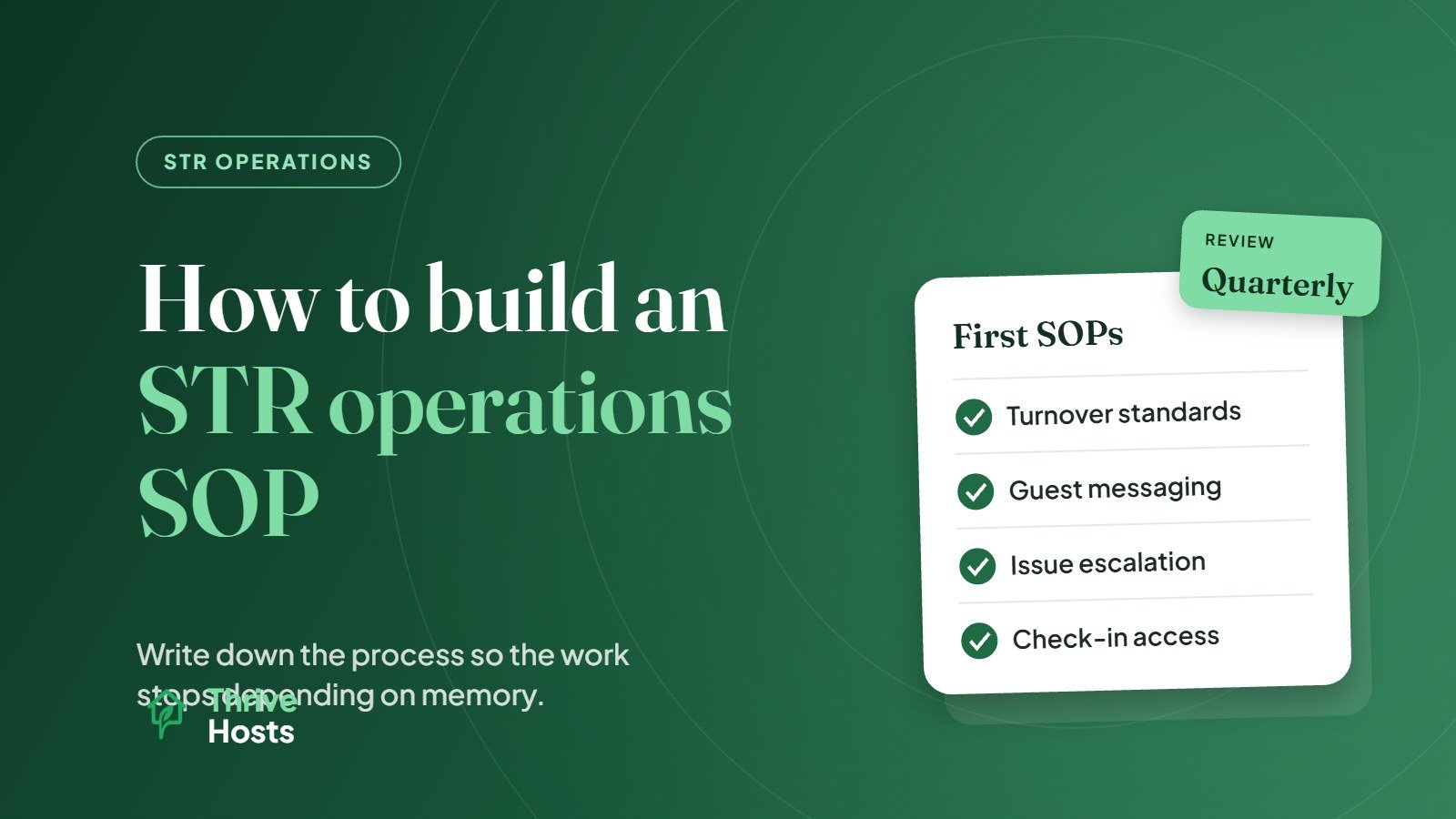
You do not need a full library before anything improves. Start with the tasks that are repeated most often and cause the most damage when done badly. For most STR operations, that list looks like this:
- Turnover and cleaning standards, including photos of how each room should look when ready
- Guest communication, covering what is sent at each stage of the stay and how quickly messages are answered
- Issue reporting and escalation, so damage, missing items and maintenance problems reach the right person quickly
- Check-in access, including door code changes, lockbox or smart lock steps and what to do if a guest cannot get in
- Restocking and inventory, with par levels for linens, toiletries and consumables
Pricing reviews, review responses, vendor coordination and owner reporting usually come next, once the day-to-day basics are stable.
How to write an SOP people will follow
The best SOPs are written from real work, not from memory at a desk. Watch the task being done, or do it yourself with a notepad, and write down each step in the order it actually happens.
Keep each SOP focused on one task. A useful structure is short: the purpose of the task, who owns it, when it happens, the steps, the standard for “done”, and what to do when something goes wrong. That last part is where most SOPs fall short. A turnover SOP that says “clean the kitchen” is less useful than one that also says “if you find damage, photograph it, log it in the issue tracker and message the operations contact before the next guest arrives.”
Use plain language and specific detail. “Check linens” leaves room for interpretation. “Count bath towels against the par level of six per bathroom and log any shortfall” does not. Photos are especially useful for cleaning and staging standards, because they remove argument about what “ready” means.
Make SOPs property-aware
If you run more than one property, write one core SOP per task and add short property-specific notes rather than separate documents for each unit. The core turnover process is usually the same; what changes is the hot tub, the pull-out sofa or the tricky lock. Keeping the variations in a short appendix makes it much easier to update the core process once and have it apply everywhere. This approach matters even more once you are managing multiple short-term rental properties.
Store them where the work happens
An SOP that lives in a forgotten folder will not change behavior. Put SOPs where the people doing the work already look: a shared drive linked from the cleaner group chat, a task in your property management software, or a pinned link in your team workspace. Cleaners in particular need mobile-friendly formats, often with photos rather than long paragraphs.
Review and update them regularly
SOPs go stale quickly. A new appliance, a platform change or a recurring guest complaint can all make a procedure outdated. Set a simple rule: whenever the same mistake happens twice, the related SOP gets reviewed. A broader review every quarter catches anything that has drifted.
It also helps to give one person ownership of the SOP library. In many operations, that is the role an STR operations manager fills, keeping procedures current and making sure new cleaners or co-hosts are trained on them.
If you want help spotting where your current processes break down, start with an operations review.
The real value of SOPs
Good SOPs make your operation less dependent on any single person, including you. They make it easier to bring in a new cleaner, hand off guest messaging or step away for a week without things slipping. They also make problems easier to diagnose, because when something goes wrong you can see whether the process was unclear or simply not followed.
Want help turning your operations into a system?
Thrive Hosts works remotely with STR owners to document and run recurring operations, from guest messaging and issue tracking to coordinating with your approved local cleaners and vendors. You keep control of your property and accounts.
Discuss Your Operations
Bruce J is the CEO of Thrive Hosts and leads the short-term rental team. He works on the operations and performance side of STR: guest communication, pricing and calendar discipline, turnovers, issue tracking and owner reporting across Airbnb, Vrbo and Booking.com. On the blog he writes practical, no-fluff guides for owners and operators who want their rentals to run more consistently.