An STR operations manager is the person responsible for making sure every stay runs the way it should, from booking to checkout, without the owner having to chase each step. They do not usually clean the property or fix the boiler. They make sure the right person does it, at the right time, and that someone follows up afterwards.
The title gets used loosely. In a large vacation rental company it can mean someone overseeing dozens of staff. For an owner with two or three listings, it usually means one person, in-house or outsourced, who owns the daily operating rhythm. This article focuses on that second version, because it is the one most independent owners are trying to understand.
The Core Job: Keeping Every Stay on Track
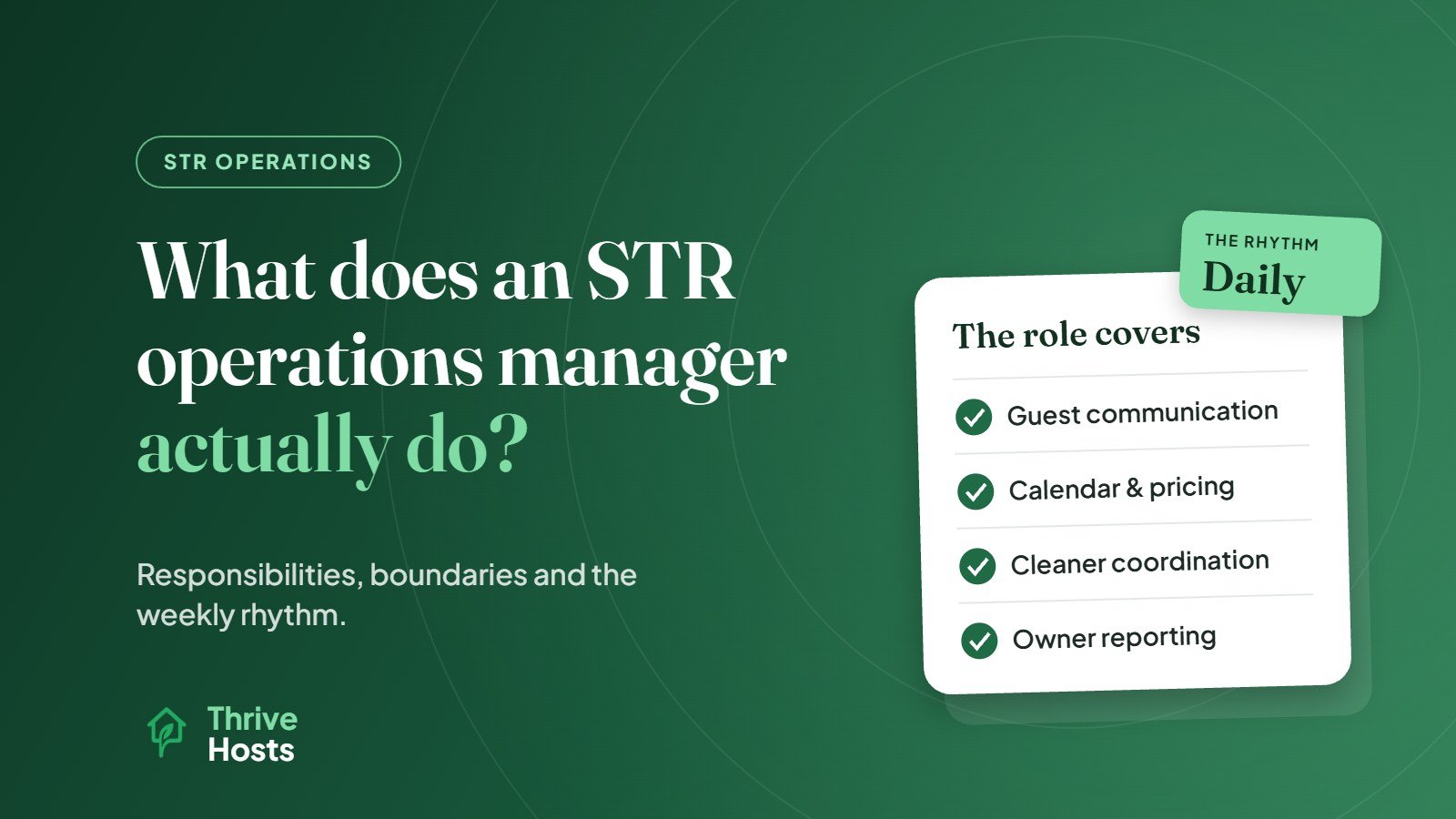
Most of an operations manager’s work falls into a few connected areas. Guest communication comes first: answering pre-booking questions, sending check-in details, handling requests during the stay and dealing with complaints before they turn into reviews. Next is the calendar. That means watching availability across Airbnb, Vrbo, Booking.com or a direct booking site, catching gaps and blocked dates, and making sure every booking has a matching cleaning slot.
Then comes turnover coordination. The operations manager schedules your cleaner, confirms the clean was completed, reviews photos or checklists, and arranges restocking. When something breaks, they log it, contact an approved vendor, get a quote if needed, confirm the fix, and close the issue. On top of that sits listing upkeep, such as keeping photos, amenities and house rules accurate, and regular reporting back to the owner.
None of these tasks is complicated on its own. The value is in connecting them. A late checkout request affects the cleaner. A cleaner’s damage report affects the next guest. A pricing change affects how many turnovers happen next week. An operations manager sees those links because they sit in the middle of all of them.
What a Typical Week Looks Like
A useful way to understand the role is by rhythm. Each day starts with the inbox and the calendar: who arrives today, who leaves, whether every turnover is confirmed, and whether any guest has an open question or problem. During the day the work is mostly reactive: messages, a cleaner running late, a guest who cannot find the parking spot, a vendor confirming a time.
Weekly, the focus moves forward. The operations manager reviews the next few weeks of bookings, flags gaps and same-day turnovers, checks pricing settings against demand, and chases any maintenance item still open. Monthly, they pull together a short owner report covering bookings, revenue, reviews, issues raised and resolved, and anything that needs a decision.
Where the Role Stops
This is the part most job descriptions skip, and it matters for setting expectations. An operations manager coordinates the work; they are not necessarily the person physically doing it. Cleaning is done by your cleaner. Repairs are done by a licensed tradesperson. If the operations manager works remotely, someone local still needs to be available for things that require a person on site, such as a lockout with a failed smart lock or a burst pipe.
Decisions with financial or legal weight usually stay with the owner as well. Replacing an appliance, changing a cancellation policy, accepting a large damage claim, renovating, or responding to a new local regulation are owner decisions. A good operations manager brings you the information and a recommendation, then acts once you approve.
The clearer these boundaries are written down, the better the arrangement works. Ambiguity is where things fall through, typically in the gap between what the owner assumed was covered and what the operations manager thought was out of scope.
How You Know the Role Is Being Done Well
You should not have to watch every message to judge an operations manager. A handful of signals tell you most of what you need. Guest messages are answered quickly at all hours the platforms expect. Turnovers are confirmed before arrival, not after a guest complains. Issues have an owner, a status and a date, and they get closed. Reviews mention cleanliness, check-in and communication positively and consistently. And you receive a regular report that tells you what happened without you having to ask.
If you find yourself checking the Airbnb app several times a day to make sure things are fine, the operations function either is not in place yet or is not trusted. Both are worth fixing.
Do You Need One?
Every short-term rental has an operations manager. Often it is the owner, doing the job in the evenings around another career. That can work well for a single property you live near. It starts to break down when you are remote, when you add a second or third listing, or when the work starts happening at times you cannot respond to.
Common signs it is time to hand the role off: guest messages wait hours for a reply, cleaners hear about bookings late, maintenance issues stay open from one guest to the next, or you have stopped reviewing pricing because there is no time left after the daily firefighting. Our guide to managing a short-term rental remotely covers how to structure this if you live far from the property, and the short-term rental operations checklist lays out the recurring tasks the role should cover.
Getting Operations Support Without Hiring Full Time
For many owners a full-time hire does not make sense for one to five properties. Thrive Hosts provides remote short-term rental operations support that covers the operations manager role: guest communication, calendar and pricing oversight, cleaner and turnover coordination with your approved local team, vendor follow-up, issue tracking and owner reporting.
You keep ownership of the property, the listings and the accounts. We run the operating rhythm behind them and bring decisions to you when they need your approval.
Explore STR operations support
See how a remote operations function would work for your property, what we would handle, and what stays with you and your local team.
Explore STR Operations Support
Bruce J is the CEO of Thrive Hosts and leads the short-term rental team. He works on the operations and performance side of STR: guest communication, pricing and calendar discipline, turnovers, issue tracking and owner reporting across Airbnb, Vrbo and Booking.com. On the blog he writes practical, no-fluff guides for owners and operators who want their rentals to run more consistently.