Most pricing mistakes begin with comparing the wrong listings. An owner of a two-bedroom flat with no parking looks at the highest-priced house on the same street, concludes they are underpriced and raises rates, then wonders why the calendar goes quiet. A competitor set is a small, deliberate group of listings that really compete for the same guests on the same dates, and it keeps pricing decisions grounded.
What makes a listing a real competitor
Compete means a guest could reasonably book either one. Match on the things guests filter by first: location or neighbourhood, number of bedrooms and guests it sleeps, property type and key amenities. Then add quality signals, such as the review score and number of reviews, photo quality and overall condition. A new listing with three reviews and a well-established one with 200 are not direct comparisons, even if they are next door.
Be strict about amenities that change who books. A pool, a hot tub, a view, parking, pet-friendliness and a dedicated workspace each define a different audience. If you do not have the feature, a listing that does is a stretch comparison, not a core one.
Build the set in two layers
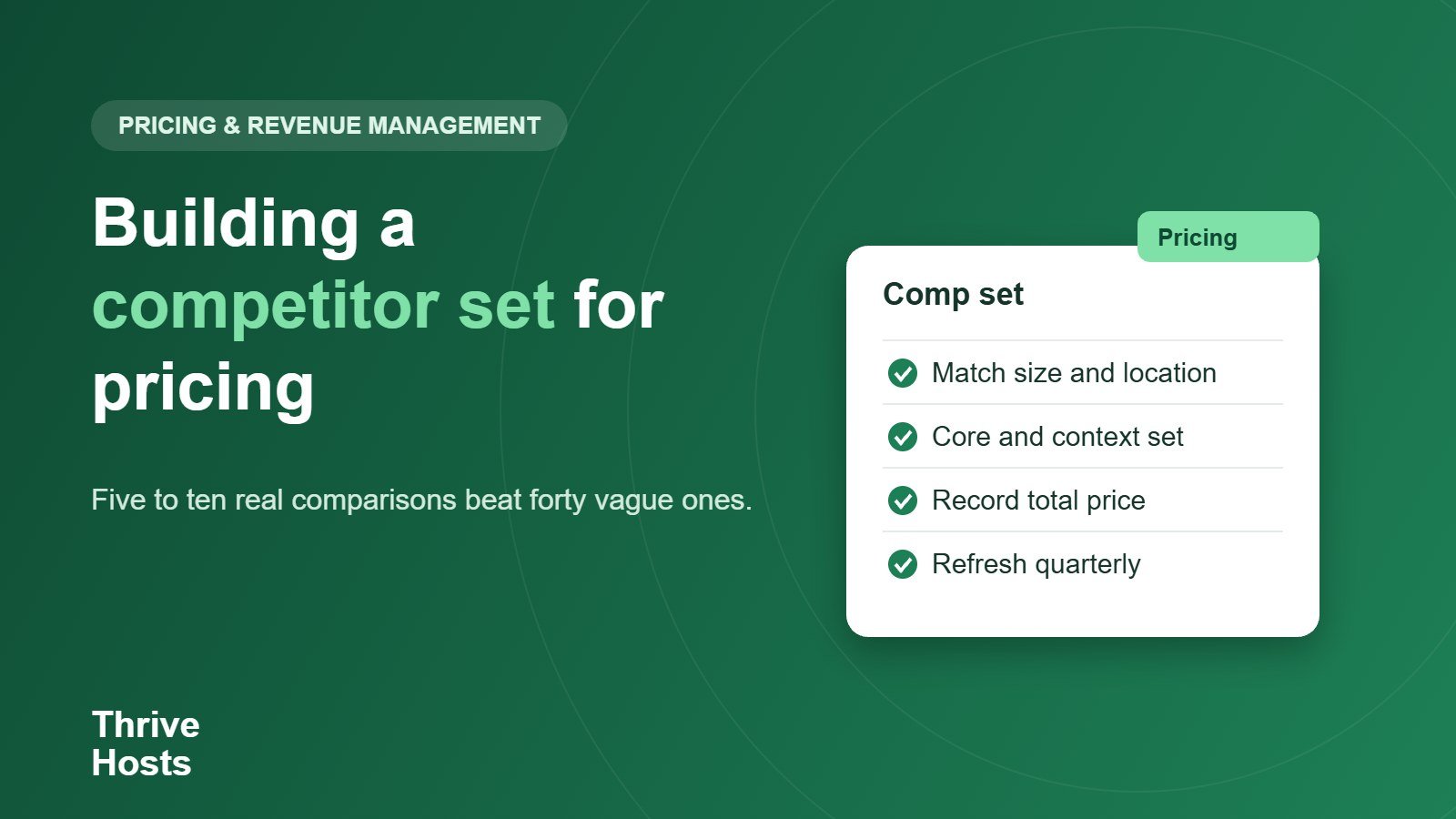
- Core set: five to ten listings that match you closely on size, location, type and quality. These drive your price decisions.
- Context set: a few listings that are close but not equal, such as a larger home, a stronger location or a newer property. These tell you what is possible if you improve.
Avoid including every listing in the area. A set of 40 gives a muddy average. Ten well-chosen comparisons beat forty vague ones.
Find them using your own dates
Search on Airbnb, Vrbo or Booking.com as a guest would, for the dates you care about and the number of guests you sleep, then apply filters that match your property. Look at several date ranges, such as a typical weekday, a weekend, a holiday and a quiet week, because competitors behave differently across them. Save the listings in a list or spreadsheet so you can come back to them.
What to record
For each listing, note the nightly rate for your sample dates, the cleaning fee and the total price for a typical stay length, because guests compare totals. Also record the minimum stay, the cancellation policy, whether dates are open or booked, the review score and any standout features. A booked date is useful evidence, though availability can also mean a host has blocked the calendar. The ADR calculator helps you work out your own average to compare against.
Read the pattern, not a single number
Ignore the highest and lowest outliers. Look at where your price sits within the core set for each date range, and whether the listings with similar quality are filling their calendars. If you are cheaper than almost everyone and still not booked, price may not be the issue, and the problem could be your photos, title or reviews. Our guide on why an Airbnb listing is not getting bookings helps separate pricing from presentation.
Turn it into decisions
A competitor set informs your price. It should not dictate it. If you offer something others do not, such as a quieter location or better equipment, you may be worth a premium. If competitors have far more reviews, you may need to price a little under them until you catch up. Combine the findings with demand drivers like local events and the broader approach in our Airbnb pricing strategy guide.
Refresh it regularly
Competitors change. New listings arrive, some close and others upgrade. Review the set every quarter and before each peak season, replace listings that no longer fit and update your notes. Check the calendars of your core set a few weeks out when you are deciding whether to move prices.
Build-the-set checklist
- Define what makes a listing comparable to yours.
- Choose five to ten core comparisons and a few context listings.
- Search with real dates and guest numbers.
- Record nightly rate, fees, total price, minimum stay and review data.
- Ignore outliers and look for patterns by date type.
- Refresh the set each quarter.
Prefer someone else to keep the comparison up to date?
Thrive Hosts supports pricing and calendar decisions with ongoing market comparison, owner approval and clear reporting. See how our Airbnb co-hosting service handles pricing support.
Explore Airbnb co-hosting
Bruce J is the CEO of Thrive Hosts and leads the short-term rental team. He works on the operations and performance side of STR: guest communication, pricing and calendar discipline, turnovers, issue tracking and owner reporting across Airbnb, Vrbo and Booking.com. On the blog he writes practical, no-fluff guides for owners and operators who want their rentals to run more consistently.