In a small hotel or motel, the most fragile moment of the day is often the change of shift. The person leaving knows about the room with the broken shower, the guest who asked for a late checkout and the card that was declined. The person arriving knows none of it unless someone tells them, and in a team of three or four that someone is often a rushed sentence at the door.
A good handover does not need software. It needs a consistent structure, a place where it is written down and a rule that nothing important lives only in someone’s head.
Decide what a handover must contain
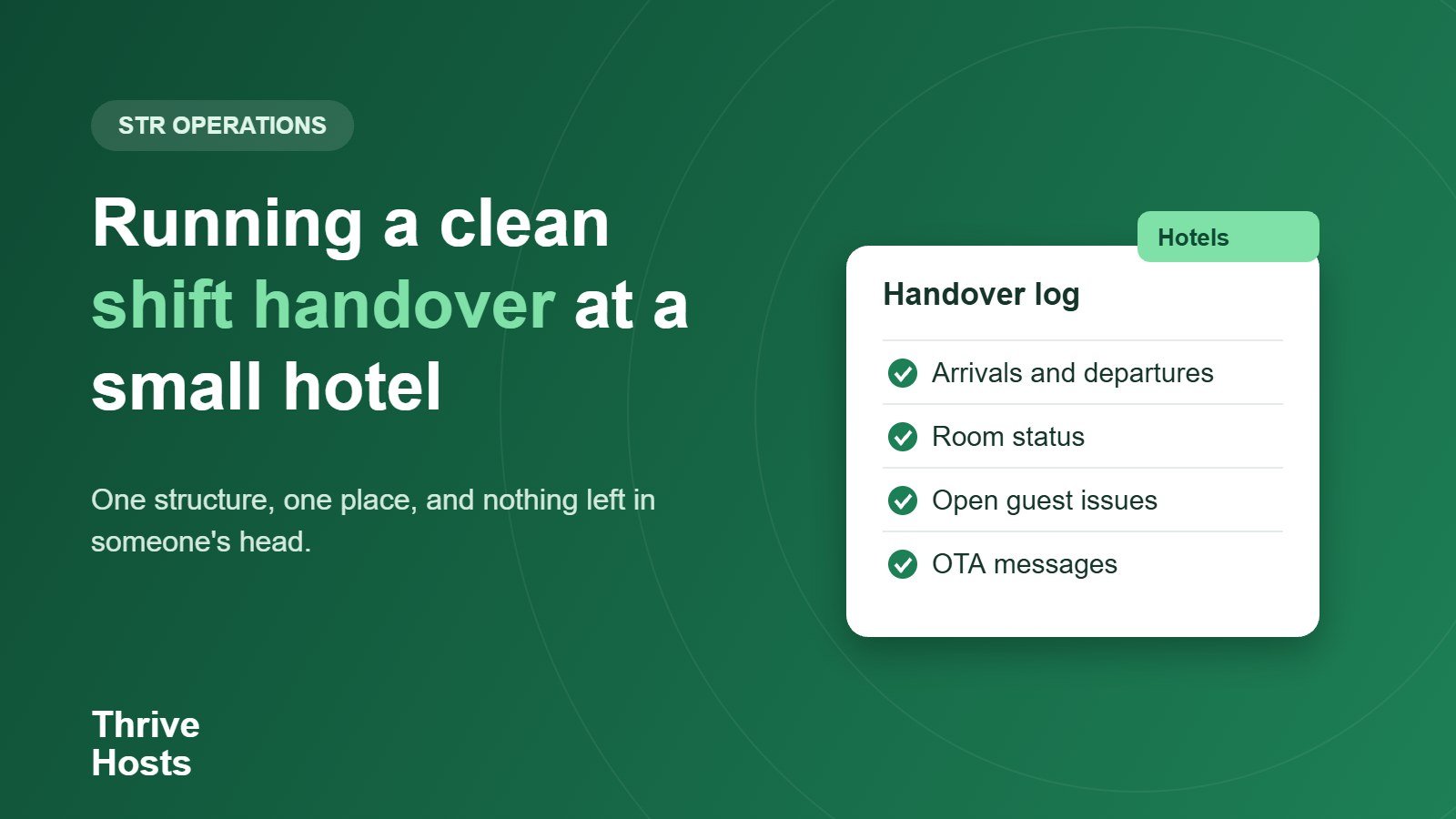
The best handover logs are short and repetitive. Each one should answer the same questions in the same order so that the next person can scan it in two minutes. A workable structure covers five areas.
- Arrivals and departures: who is due, expected arrival times, special requests, late check-outs agreed and any guests who have not yet arrived.
- Room status: which rooms are clean, dirty, inspected or out of order, and any rooms that are blocked and why.
- Open guest issues: complaints, requests, anything promised and not yet delivered, and who is following up.
- Payments and reservations: declined cards, pending deposits, no-shows to report, upcoming overbooking risks and changes made to availability.
- Maintenance and housekeeping notes: faults reported, work orders opened and the next step.
Keep it in one shared place
A paper logbook can work, but a shared document or simple task board is easier to search and can be read by a manager who is not on site. Whatever you use, keep it as the single place for handover information. If notes appear on sticky papers, in text messages and in a notebook, the next shift will miss at least one of them. Where a property has no 24-hour desk, the handover often passes from a person to a phone or lockbox arrangement, and our guide on running a hotel without a 24-hour front desk explains how to keep the guest experience steady across those gaps.
Make room status the shared language
Housekeeping and the front desk should use the same room statuses. If housekeeping marks a room ready and reception believes it is still being cleaned, the guest waits in the lobby. Agree a small set of statuses, define exactly what each means and update them at the same moments every day. Our article on housekeeping coordination in a small hotel shows how to connect those handoffs to arrival times.
Include the OTA side
Online bookings add work that is easy to forget: new messages from Booking.com or Expedia, requests for changes, upcoming no-show deadlines and reservations that need a card check. The shift leaving should state what has been answered and what is waiting. If you have one person watching the inbox, make that explicit. See managing the OTA inbox at a small hotel for a daily routine that fits into the handover.
Confirm the handover in person or in writing
A written log is useful only if the next person reads it. Ask the incoming staff member to read the log at the start of the shift and acknowledge anything marked urgent. For a manager working remotely, a short end-of-day summary delivered by message gives the same effect. A shift handover that is not acknowledged is a note, not a handover.
Review the log weekly
Once a week, skim the logs for patterns. The same room appearing three times in the maintenance section needs a repair rather than another note, and repeated guest requests, such as extra towels or late check-ins, suggest a change in the standard setup. Reviewing the log is where the handover becomes a tool for improving operations and not just recording them.
Handover checklist
- Use the same structure every shift.
- List arrivals, departures and special requests.
- Update room status in shared terms.
- Record open guest issues and who owns them.
- Note payments, no-shows and availability changes.
- Log maintenance and OTA messages.
- Ask the incoming person to acknowledge urgent items.
- Review the logs weekly for patterns.
Short-staffed and relying on memory?
Thrive Hosts supports independent hotels and motels remotely with OTA inbox management, guest message follow-up and operational reporting, so the information that matters is written down and followed through. Explore our hotel and motel operations support. We coordinate remotely and do not provide on-site staff.
Explore hotel operations support
Bruce J is the CEO of Thrive Hosts and leads the short-term rental team. He works on the operations and performance side of STR: guest communication, pricing and calendar discipline, turnovers, issue tracking and owner reporting across Airbnb, Vrbo and Booking.com. On the blog he writes practical, no-fluff guides for owners and operators who want their rentals to run more consistently.