There is no single correct response time for hotel guest messages. A question about breakfast three weeks before arrival can wait a few hours. A guest asking how to get in at 11pm cannot. The right answer is a set of targets based on how close the guest is to arrival and how urgent the question is, and a routine that lets a small team meet them.
What the platforms measure
Booking.com shows partners a Reply Score in the Extranet, based on how quickly the property responds to guest messages, and gives partners 14 days to reply to a guest message. Other OTAs have their own messaging tools and expectations. Treat platform limits as the floor, not the goal. Guests judge you by whether they got an answer before they needed it.
Realistic targets for a small property
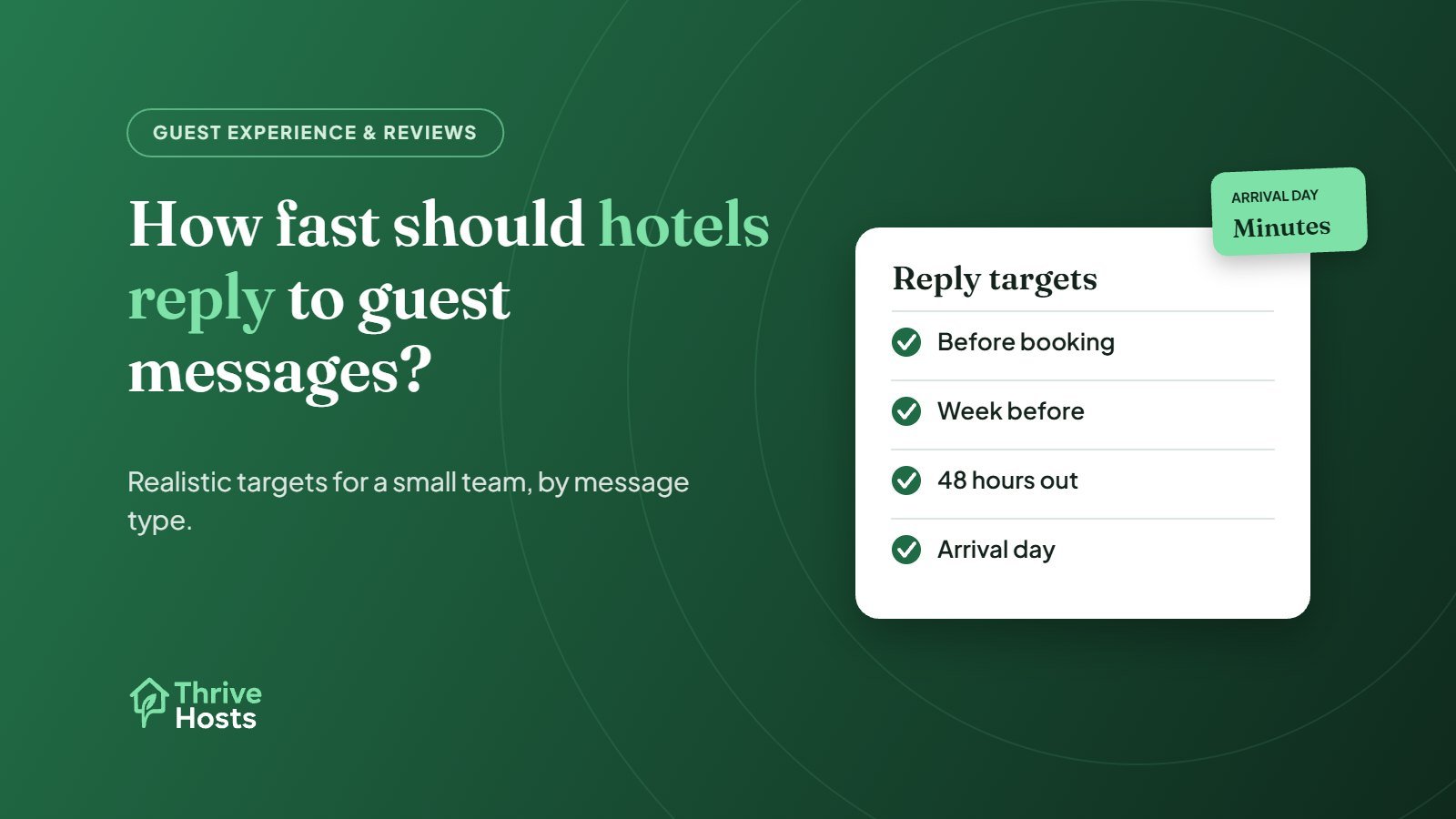
- Before booking: within a few hours during the day. An unanswered enquiry is often a lost booking.
- After booking, more than a week out: the same day.
- Within 48 hours of arrival: within an hour or two, because guests are planning travel and arrival times.
- On arrival day and during the stay: as fast as possible, ideally minutes, especially for access, parking and room problems.
- After checkout: within a day or two, for lost property and invoice requests.
These are working targets, not promises to put on your website. What matters is that someone is responsible for meeting them at every hour guests are likely to message.
Where small hotels fall behind
Response times usually slip in predictable places: evenings after the desk closes, weekends when the owner is off, and busy check-in hours when the desk is focused on guests in front of them. Messages also get missed when they arrive in a channel nobody checks often, such as Expedia at a property that gets most bookings from Booking.com. Mapping every inbox and giving it an owner, as described in our OTA inbox management workflow, fixes most of this.
What a slow reply costs
Take a guest who books a motel room for a late arrival and messages through Booking.com at 6pm asking whether anyone will be there after 11pm. If nobody answers, they message again at 8pm, then phone at 9pm when the line goes to voicemail. By the time they arrive, they are already irritated, and the first thing they mention at check-in, or in their review, is that nobody replied. The question itself took ten seconds to answer.
Slow replies also create more work. One unanswered question often turns into three messages, a phone call and a follow-up after arrival. Fast, short answers keep the conversation small.
Answer quickly without answering everything
A fast reply does not have to be a complete reply. If a guest asks for an early check-in, the right first reply is often “Thanks, we’ve asked housekeeping and will confirm by 10am tomorrow.” That buys time and reassures the guest. The important part is that someone then follows up.
Saved templates help with speed and consistency. Booking.com lets partners save message templates, set up automatic replies and schedule answers to common questions. Our guide to automating guest messaging for a small hotel explains what to automate and what to keep personal.
Reduce the number of messages you need to answer
The fastest reply is the one you never have to write. Most hotel messages are about the same handful of topics: parking, arrival after hours, check-in time, breakfast and directions. Answer those in your listing and in a clear pre-arrival message, and inbound questions drop noticeably.
Cover the hours your desk does not
If your front desk closes in the evening, someone still needs to see messages from guests arriving late or having a problem overnight. That can be a manager on call with the apps on their phone, or a remote team covering messages. Our article on handling guest issues without a 24-hour front desk covers how to set that up safely.
Our guest messaging and OTA inbox service covers messages around the clock, with escalation rules agreed during setup, for hotels, motels and short-term rentals. For the wider operational side, see our support for small hotels and motels.
Messages arriving faster than your team can answer?
Thrive Hosts covers guest messages 24/7 across Booking.com, Expedia, Airbnb and direct bookings for small hotels and motels, and escalates anything urgent to your on-site contact.
Explore guest messaging support
Bruce J is the CEO of Thrive Hosts and leads the short-term rental team. He works on the operations and performance side of STR: guest communication, pricing and calendar discipline, turnovers, issue tracking and owner reporting across Airbnb, Vrbo and Booking.com. On the blog he writes practical, no-fluff guides for owners and operators who want their rentals to run more consistently.